Ulanzi Claw quick release – Love at first click.

Hi everyone,

I decided to get one of these Ulanzi Claw quick release plates. Wow!!!, these are so quick and easy to attach and detach the camera. Unlike the Arca Swiss type plates there’s no locking screw to have to tighten/untighten. I used to like the Manfrotto ones for their sturdiness, quality and security but these Ulanzi ones are really great. To quickly try it out I put it on my new Manfrotto Pixi Evo 2 tripod, as you can see below it adds very little bulk to it. To attach the camera you just position it in any of four positions (0,90,180 or 270 degrees) press it down and it clicks into place, the claimed weight handling of 50Kg!, reassuring as it is, is far in excess of my tripod and anything that I might ever want to attach to it. With my leg and neck pain problems and other aliments I certainly wouldn’t be carrying anything weighing 50Kg very far!, I’m too old and unfit to be a Royal Marines Commando. πŸ™‚ . To release it one simply simultaneously presses on the two side red and black coloured “buttons” and that’s it. The red button has a lock position and the whole thing feels really secure and weighs only 59g or approx. 2 ounces. Be aware that they also do a mark II version which, along with the tripod bush is also Arca Swiss compatible so one has the best of both worlds. If I’d have realised I’d have bought that version for its extra versatility but it’s not in any way a show-stopper.

At circa Β£26 UK the Ulanzi Claw isn’t the cheapest release plate around but I think that one gets what one pays for, would you trust your expensive camera and lens to a cheap and cheerful plate?, I know I wouldn’t and it’s really nicely designed and made of aluminium. I don’t go overboard on packaging but it is attractive and screams quality. I’m so impressed that I ordered one of their U-100 ball heads with claw fitting which also has the added bonus of a cold shoe mount from their website whilst they have their Black Friday deals principally to go on my Manfrotto lightweight monopod or possibly my original Pixi mini tripod. I’ll also have an extra camera plate to attach to another of my cameras. Over time I can see myself standardising on this system as and when funds permit, it’s just so quick and simple. Apart from the extremely serious personal consideration of weight, part of my dislike of camera supports is the time they take to constantly setup and collapse which doesn’t live happily with my shooting style so anything that simplifies and speeds up this process has my vote. So, like them or not, until some ingenious designer designs the ultra-lightweight, ultra-compact, automatic-assembly/disassembly “Transformers Hover Pod”, I’m stuck with conventional camera supports but this does make life one little bit easier which is most appreciated. πŸ™‚

Some pics:

Kind regards

Leigh

Liberating and a lot of fun.

Hi everyone,

I’m currently going through my shots taken in Marbella. The main purpose of the trip was a close family wedding at a beautiful venue but I also managed to get a while wandering around the old town in Marbella which is very interesting and beautiful as best as my legs would allow me. I wanted to take just a camera and one prime lens so after some deliberation I decided on a little bit of a calculated gamble and just took my Olympus E-M1 mk1 and M.Zuiko 25mm f/1.8 “nifty fifty”. I wanted a camera lens combination that wouldn’t be too imposing and would be fast and versatile for both informal stand-off portraits and wider small group shots at the wedding and also a good walkabout focal length for street shots, this worked extremely well and was, especially weight-wise, absolutely liberating. I chose my E-M1 because it has the best ergonomics of all of my Olympus camera models, totally subjective but it just feel right in one’s hand.

There were a few occasions when walking around the confined narrow streets of old town when I could have maybe done with a slightly wider lens like my M.Zuiko 17mm f/1.8 or Lumix 20mm f/1.7 but not so often as to be of a concern and this lens proved a very good lightweight all round choice especially outside in low light during the evening wedding reception which went on into the night. This was the reason in particular why I decided not to take the 20mm, optically great lens as it is, it does somewhat hunt in low light and can be slow to focus on occasions when compared to the blazingly-fast Olympus lenses.. I left my new 1/4 strength K&F Concept black mist diffusion filter fitted and this gave me some very nice dreamy lighting effects as well as a degree of pleasing flattering softening for people shots.

Funny how, after the best part of fifty or so years things have more or less come full circle. I started out with a lightweight Olympus OM series film camera with only a 50mm f/1.8 lens and despite using other gear along the way I’m now steadily rediscovering the joys of using a small Olympus camera with only a 50mm f/1.8 equivalent lens. πŸ™‚

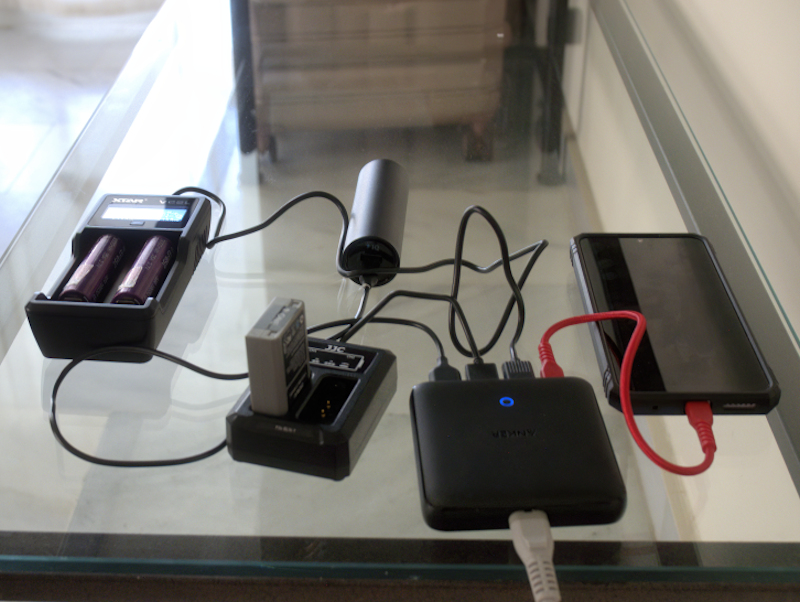
My USB charging gear worked as well as it always does, for once, we had a beautiful, spacious, modern apartment with more mains sockets than one could ever hope for! but I only need one to charge things up as required and I did have the further luxury of a table to put things on this time, it doesn’t get much better than that!. πŸ™‚

More shots of Marbella to follow.

Kind regards

Leigh

Something new to try out

Hi everyone,

I don’t usually get overly excited about filters. I own quite a few, mostly ND and CPL filters but they don’t get very much usage but I’m expecting delivery today of a 1/4 strength black mist diffusion filter. I’ve chosen the 1/4 strength to start with, if I like the effect I might invest in other strengths, possibly a 1/2 strength one.

Probably because I’m not a filter aficionado and not into cinematography or portraiture I hadn’t heard about this type of filter which I believe is well known about and used in these genres but I think that it might work well with my landscape shots. I very often use diffusion and/or glow in post and I do really like softer, warmer, filmic looks and I frequently use Look-Up-Tables or LUTs to help achieve the look that I’m after. I’ll post some shots taken with this filter ASAP and I’ll almost certainly be taking it on my next overseas trip which is coming around very quickly now which includes a family wedding.

Kind regards

Leigh

These are a few of my favourite (travel) things :) UPDATED.

Hi everyone,

Don’t worry I’m not about to break into a medley of songs from The Sound of Music but I could be tempted for a suitable remuneration in which case I can also supply the free loan of a pair of noise-cancelling headphones which make excellent ear defenders. πŸ™‚ Here’s some of my favourite and most useful things that I pack in my travel gear, some general and some photography-specific.

Anker 5-port USB charging hub. Travelled with me extensively and the backbone of my USB charging. Compact, metal-cased and takes an interchangeable figure of eight mains lead and has a 100-240 input voltage so will work just about anywhere in the world with a suitable cable. They do newer versions but this one has served me very well over the years and I don’t have any immediate need to change it.

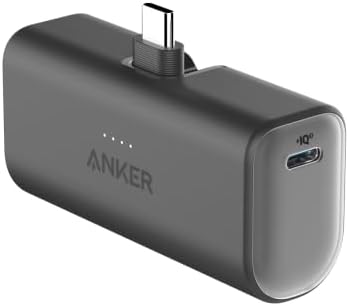
Another Anker product, my newly acquired Anker Nano USB power bank which I recently posted about. I’ve always travelled with a USB power bank of some sorts and this is very small and light, with a second output port. It attaches directly to the phone so no cable required and is more or less dedicated to topping up my phone battery on the move. It doesn’t have the capacity to fully charge the phone but it does top it up quite a bit until one can get to somewhere where one can charge it normally.

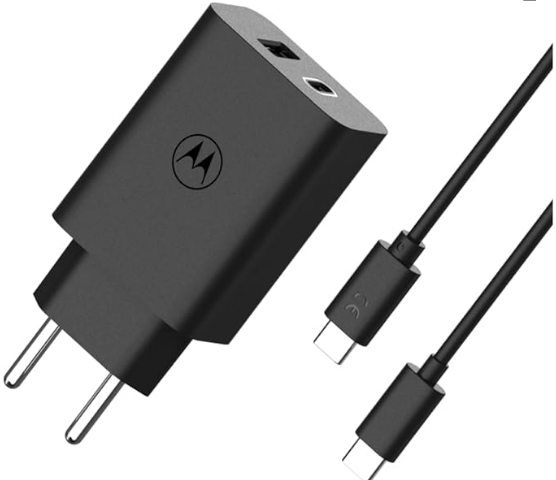
I found a nice dedicated fast charging solution for my Motorola G30 mobile phone the Motorola Turbopower 50W Duo USB-C + USB-A Charger, As my travels are mostly in Europe I wanted a charger with a 2 pin European plug connection, input voltage  100-240V AC, 50/60Hz. Not only is this charger less bulky and doesn’t require a UK to EU plug adapter it also has both USB-C fast charge and USB A sockets so can act as an additional or backup charger to my Anker charger should I require it. It has therefore replaced both my Motorola UK plug phone fast charger and my travel plug adapter/ 2 port USB backup charger. A significant weight and particularly space saving in my travelling tech bag. It has USB-PD Power Delivery and Quick Charge 3.0 technologies.

Another nice thing about this charger is that it could theoretically be used to simultaneously charge my Anker Nano USB power bank and the attached phone using the power bank’s passthrough charging feature and still have an extra USB-A port to charge another device. Not something that I’ve tried out as yet but I will be doing so as it could be really useful in the event of anything happening to my main Anker USB charging hub.

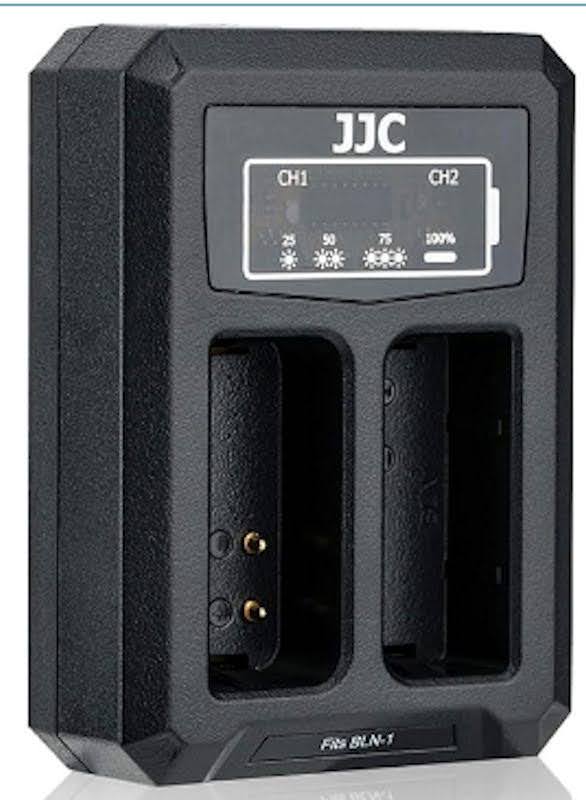
JJC USB dual camera battery charger, I have two of these to suit different types of camera batteries. It has a short 15cm hard-wired built in USB Type A cable which folds away neatly and stores on the back, it’s small, light and works well. It also comes with a short 40cm USB extension cable which could be useful.

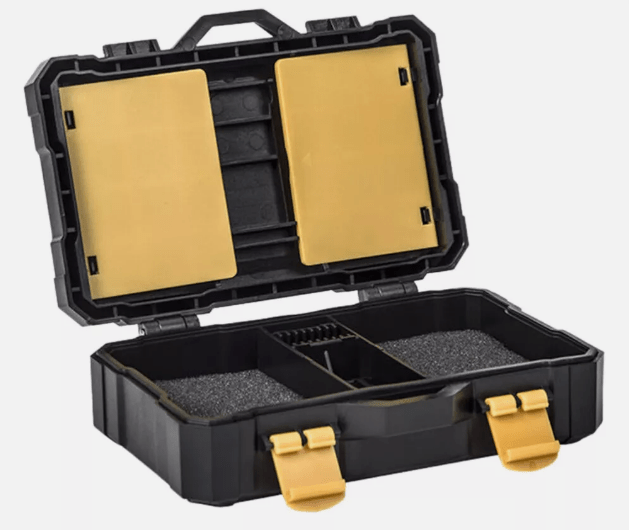
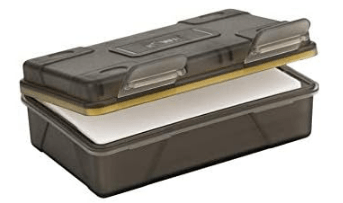
My chosen memory card and battery case. This one holds two batteries and has compartments for 5 SDHC cards as well as several micro SD cards and 2 Compact Flash cards of which I have no need so I keep a couple of lens wipe sachets in these yellow-coloured hinged compartments instead. Both battery types (BLN-1 and BLS-5/50) as fit my various Olympus OM-D and PEN series cameras fit in comfortably. It’s not overly heavy, it’s water-resistant, well constructed and gives a good degree of protection to the contents which is just about all I can ask of it. A slight cautionary note, I’ve added some prominent “This way up” labelling to the outside of the hinged lid as if, in an absent-minded moment, one inadvertently opens it upside down then everything is going to fall out!, I speak from experience . πŸ™‚ What would be nice is some form of latching bar mechanism over the batteries and cards which would prevent this from happening.

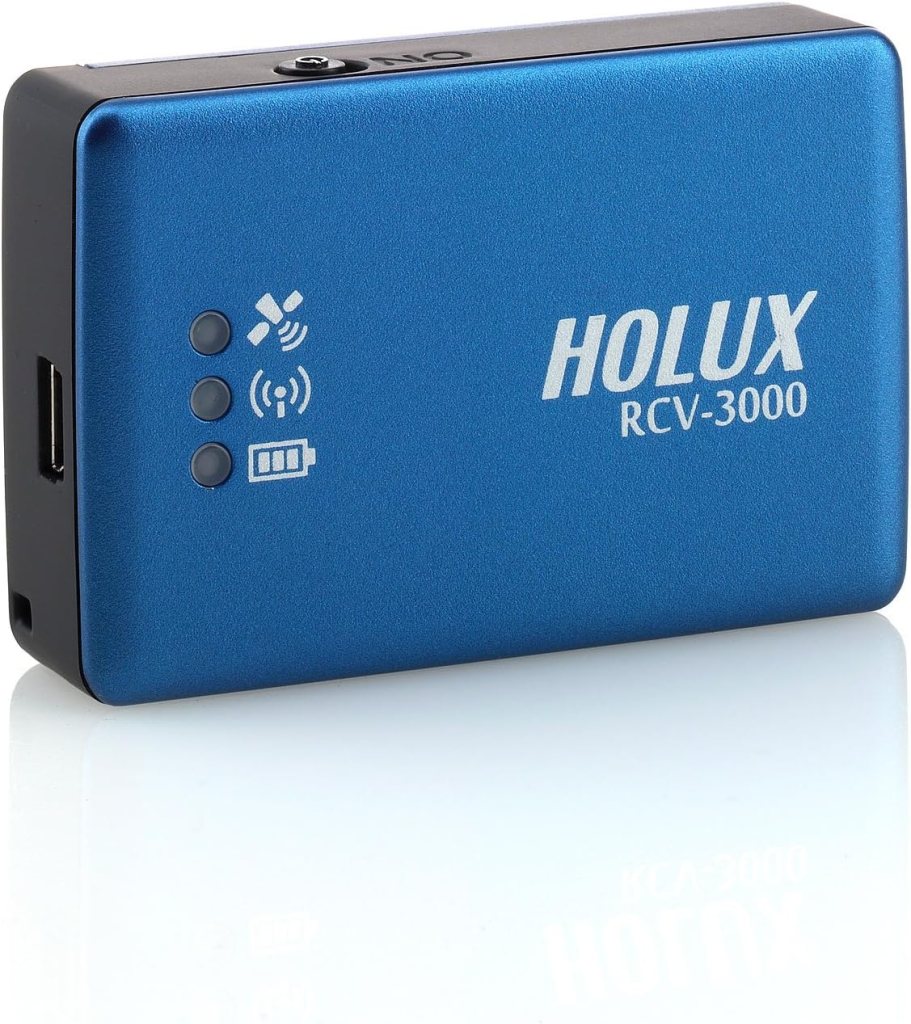
Subject of another recent post, my matchbox-sized Holux RCV-3000 USB/Bluetooth GPS data logger which is so useful for recording and subsequently geotagging the location of my shots.

Lastly another non electrical item which has come in handy on more than one occasion, my humble multitool. Everything from occasionally using the pliers or screwdriver to possibly, most importantly, opening a bottle of beer. πŸ™‚

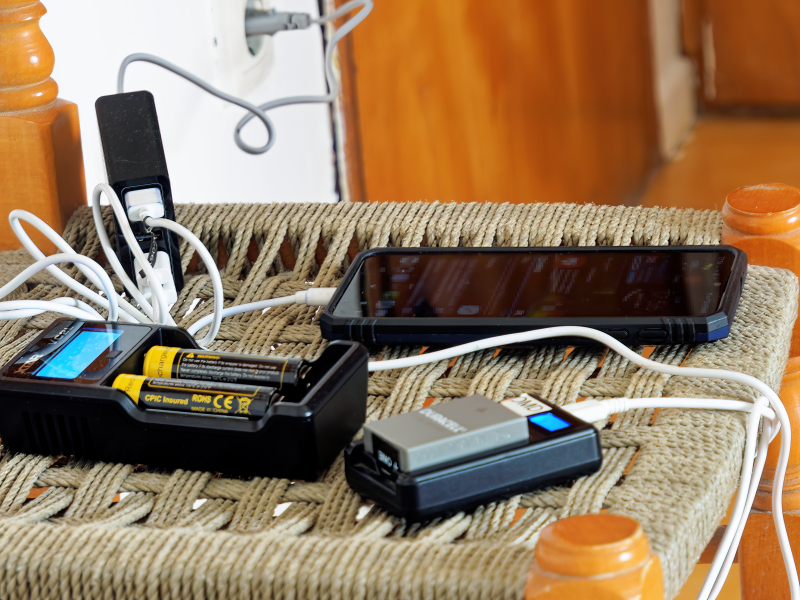
When one only has one mains socket and not even a table to charge things on. At least the mains socket didn’t alarmingly come away from the wall when unplugging which has happened to me a couple of times on my travels, a good reason to take a USB power bank πŸ™‚ and I suppose that, looking on the bright side of life, at least I had a chair πŸ™‚

Kind regards

Leigh

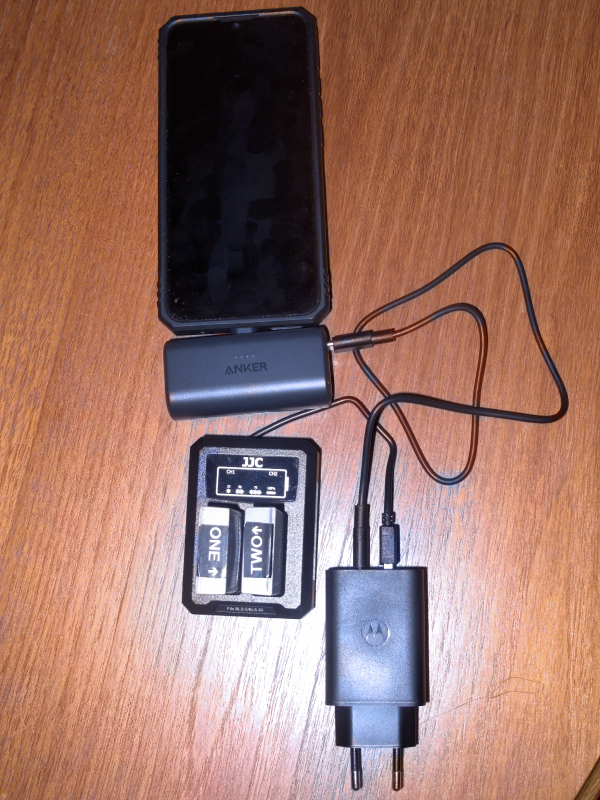
Update: I’ve now had a chance to try out passthrough charging the Anker Nano power bank (USB Type-C) and my phone and also simultaneously charging two camera batteries using my JJC USB dual camera battery charger (USB Type-A) from my Motorola 50w USB wall charger. All seem to work well, so these are going in my camera bag hand luggage. πŸ™‚ These are the things that I most frequently need to charge and serving as a backup to the charging gear in the tech bag in my hold luggage should my case go missing.

Anker Nano USB Power Bank

Hi everyone,

I’ve recently purchased one of these small USB power banks. I have several Anker power banks one of which usually lives in my camera bag whilst travelling which, over the years, has always served me well. I’m rarely off grid for long enough to concern myself too much with running out of power for my mobile devices, especially my camera as I usually carry a couple of extra charged batteries in my bag. The appeal to me of this particular power bank is a combination of its size: 7.7 x 3.68 x 2.5 cm, weight: 98.5 g and versatility rather than it’s charge capacity. I have bigger power banks should I need the extra battery capacity but these come at a premium regarding size and weight which runs contrary to my longstanding travelling as compact and light as is possible philosophy.

The unit has a fold out USB Type C connector and it plugs directly into my mobile phone and doesn’t add much weight so no cable required to connect the two together which is handy. it’s a firm fit but when attached I’d make a point of holding the phone and not the power bank to be on the safe side. It also has a Type C socket on the side, this socket is bi-directional and doubles as a charging port and second output port and the unit also comes with a Type C male to male cable to plug in and connect to another USB device eg. one of my USB dual camera chargers or maybe, with a USB Type C female to Micro USB Type B male adapter, my Bluetooth data logger, both of which also habitually travel with me in my camera bag.

I mentioned capacity, depending on one’s make and model of mobile phone it almost certainly isn’t going to charge a heavily discharged mobile phone battery to full power, that’s not what it’s designed to achieve, but it will serve in emergencies to top the phone battery up quite a bit until one can get to charge it normally. Likewise I can’t see myself using it very often to charge two devices simultaneously via its two Type C connections as that would drain it considerably faster. It came with about 25% charge or one of the four charging LEDs lit. I charged it with a standard, not fast, USB wall charger and it took approximately 1 hour and a quarter to charge to full capacity which is reasonably fast as I hate having to hang around whilst devices like this are charging. It also has passthrough charging to charge the power bank and attached device at the same time, not something that I will probably ever need to do with my typical usage as I have a mains-powered Anker 5-port USB charging hub that I always take on my travels but never the less another nice and potentially useful feature especially if one only has a single port USB charger. They also do a model with lightning connector suitable for I-Phones.

I’m always on the look out for ways to lighten and further compact my gear so a nifty little addition to my travelling kit as well as a nice little day-to-day unit to slip into one’s bag or pocket as and when one feels that it might be required.

Kind regards

Leigh

PS. I forgot to mention that, unlike my older power banks, when it’s connected to my Motorola Moto G30 phone it charges in fast charge “Turbo” mode same as the supplied mains wall charger which is a real boon when one need to get a good charge in quickly. As an example it charged my phone from 22% to 66% on fast charge before becoming depleted, this might improve slightly after several charge/discharge cycles. As they say “your mileage may vary”.

Follow up post to my Geotagging post.

Hi everyone,

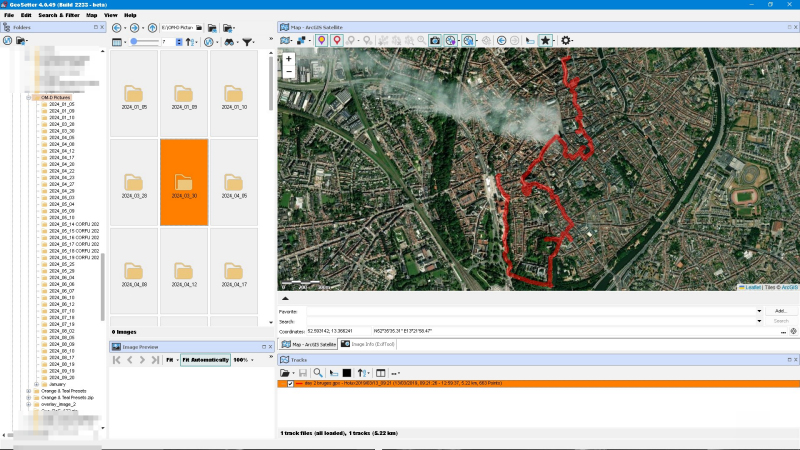
I thought I’d post a couple of example screenshots showing a track file that I recorded on my GPS Data logger when I visited Brugge some years ago. The first is from Geosetter and the second, of the same track as displayed in GPS Track Editor.

On the left one can see the list of folders containing one’s shots, select the appropriate folder and then the images can be Geotagged to the location information contained in the selected track file and displayed on the map.

On the right of the shot one can see the individual track points and one can edit these if one wishes. It also gives an indication by colour on the map of the speed of travel as well as direction of travel arrows. One can select multiple track files and overlay them on the map so if one has recorded several days of travel around an area they can be viewed at the same time.

Apart from Geotagging my shots I have a love of maps, I studied Geographic Information Systems which included Satellite Remote Sensing at University so I really enjoy viewing my travels especially on a street map at ground level in Google Earth. πŸ™‚ To give an example, when strolling around one takes a picture of a building eg. a beautiful church and one doesn’t know it’s name but can subsequently easily locate it on the map and use it when naming one’s shot which has been useful to me on numerous occasions.

Kind regards

Leigh

Is my blog still of interest?

Hi everyone,

I was wondering if my blog was still of interest. I’ve been posting to my blog for more than ten years now, met lots of interesting folks from all walks of life that share my passion for photography and travel and had a lot of fun along the way, where has the time gone?! πŸ™‚ . Unfortunately and extremely frustratingly I’ve been unable to get out and take as many photos as I could in previous years however I try and seize every opportunity I get. I try and post what I hope are useful and interesting posts on photography related gear and techniques that I use as well as posting my photos as often as I’m able to. I’ve had to tighten my belt quite a lot in the last few years in order to significantly cut back on my online expenses such as my former website, online galleries and online print sales site subscriptions and concentrate on more important issues such as keeping a roof over our heads, food in our bellies, winter heating and a host of other domestic expenses. So maybe now is the time to examine if my Blog is still of interest to folks?.

Kind regards

Leigh

Geotagging your shots.

H everyone,

For some years I’ve been taking a small lightweight Bluetooth GPS data logger with me on my travels. This device is very useful when travelling as an aid to recording where my shots were taken especially when viewed at a later date when things aren’t so fresh in one’s memory. Simply switch it on before leaving for the day, pop it in one’s pocket or camera bag and switch it off again later. I have a Holux RCV-3000 data logger which I bought eight years ago now. It’s about the size of a matchbox has three LEDs on it which show GPS satellite connection status, Bluetooth active and power/charging status, an on/off switch and a Type B mini USB port. It runs off a small, inexpensive, easily obtainable, replaceable rechargeable battery for which I have a spare and also a separate USB battery charger so that I can charge a battery outside of the unit and the battery lasts quite a good time between charges and it can also be powered via USB, a USB power bank for example. It connects to either the computer by USB cable or my Android phone via Bluetooth connection so that one can download and view the track files. It also fits nicely in one of my waterproof battery cases. Unfortunately I don’t think the company is trading anymore but I’m sure that there must be alternative makes and models out there.

Software-wise I use a free program called Geosetter which comes with a program called EXIF Tool to sync the GPS track data to my photographs and write the location data to their EXIF information. I also use some software called GPS Track Editor to view and possibly edit the GPS tracks . These programs also show the location of the shots on a map which is very useful. The important thing is to make sure that the date and time setting in one’s camera are accurate, I set them before each trip to make sure as it’s this date and time information that’s used to sync the photos correctly to the location. You can also correct for different time zones eg. daylight saving time but I keep my camera set to UTC time whilst travelling.

For my Android phone I use an app called GPS Device Toolbox to download the track files via Bluetooth to my phone for backup at the end of the day and clear the device’s memory should it become full and the device’s internal memory can record up to 200,000 position data sets and I’ve set it to record a waypoint every 10 seconds which is generally more than sufficient for my needs. I use another app called GPS Track Viewer to view the track files on the mobile phone all these programs and apps are free at the time of writing. I think that there must be comparable software out there for Apple devices.

Additionally the data logger can act as a “Mock GPS Location Provider” and use it’s GPS rather than the phone’s inbuilt GPS via Bluetooth connection using the Bluetooth GPS app. There are cameras like my Olympus TG-5 with built in GPS and one could use the GPS in one’s phone but both would increase the battery drain on these devices, mission-critically in the case of my camera/s and for that reason I prefer to use a separately powered device. Along with my indispensable Anker 5-port USB charging hub and USB camera battery chargers it’s one bit of kit that packs itself.

Kind regards

Leigh

PS. Correction, the free version of Bluetooth GPS no longer supports Mock GPS Location, this free app does: Bluetooth GNSS , tested and working with my data logger.

I’ve been labouring this point for ages.

HI everyone,

Kind regards,

Leigh

Camera half cases, why fit them?.

Hi eveyone,

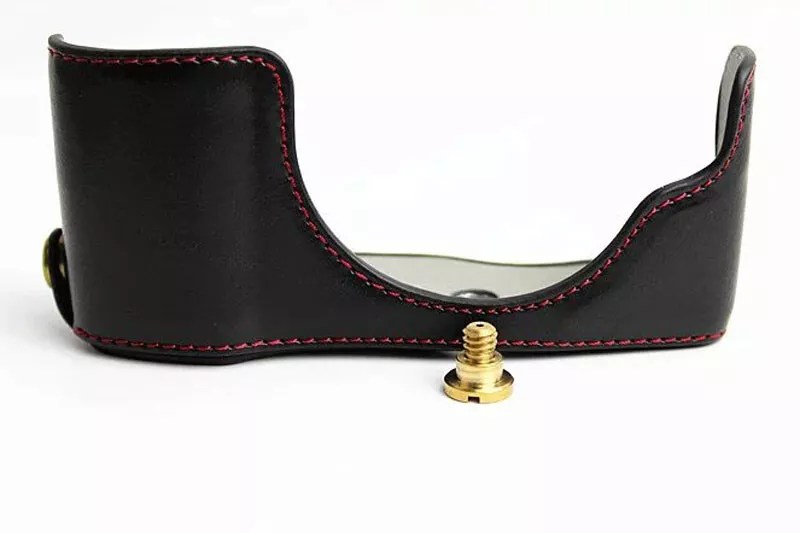
I’ve come to like camera half cases as can be seen in my previous post fitted to my Olympus OM-D E-M5 II and PEN-F camera models. I now have three, shortly to be four, of them fitted to my various camera models. For one, they add some extra protection from bumps, knocks and scuffs to the camera body as well as having a pop fastening flap for the battery compartment which proved very useful on one occasion in particular when the battery door broke on one of my cameras and I feel that they also improve the grip on the camera somewhat. They do also add a nice bit of retro styling to the camera which I like but that’s not the principal reason why I chose to fit them. I’ve also added Tile lost and found QR Code labels to the bottom of the cases as there’s nowhere on the camera bodies to attach them to. One can pick up the faux-leather ones for most models of camera on the likes of Ebay etc. and they’re quite inexpensive as camera accessories go.

If one values one’s gear, and what photographer doesn’t?, I think that fitting these is a “no-brainer” as my American friends say. Bash one of these and you can throw it away and cheaply replace it. Bash your camera body and that’s a totally different proposition with the considerable expense, inconvenience and hassle of getting it fixed always assuming that one can with out of production camera models, there’s more than a strong probability that it wouldn’t be cost-effective. At best you’ll reduce any re-sale value, at the very worst it could be a write off.

Kind regards

Leigh