The year of the PEN

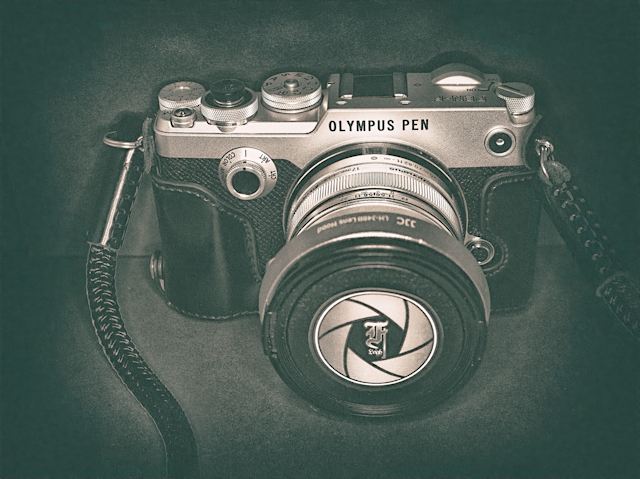
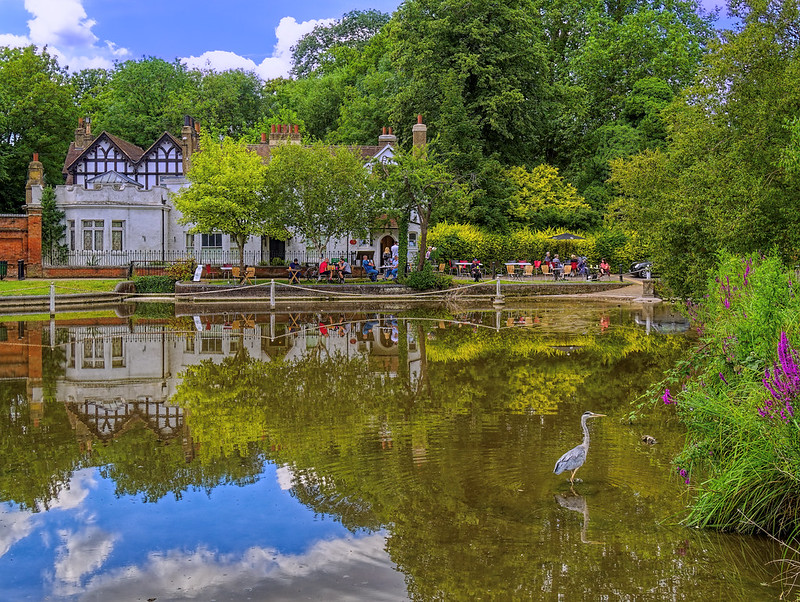
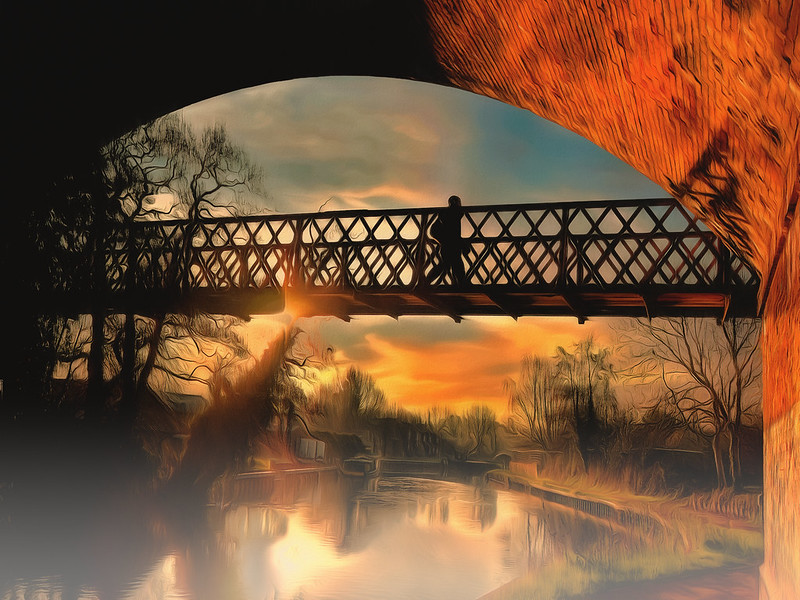
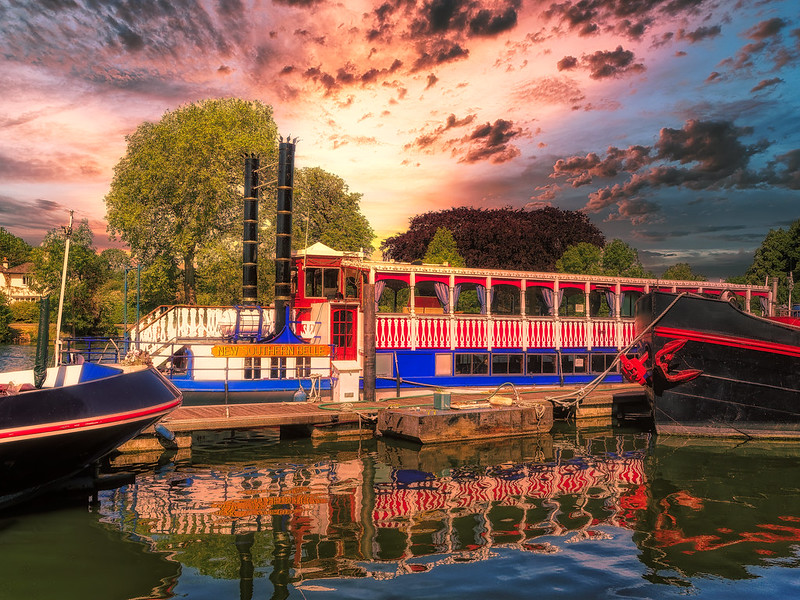
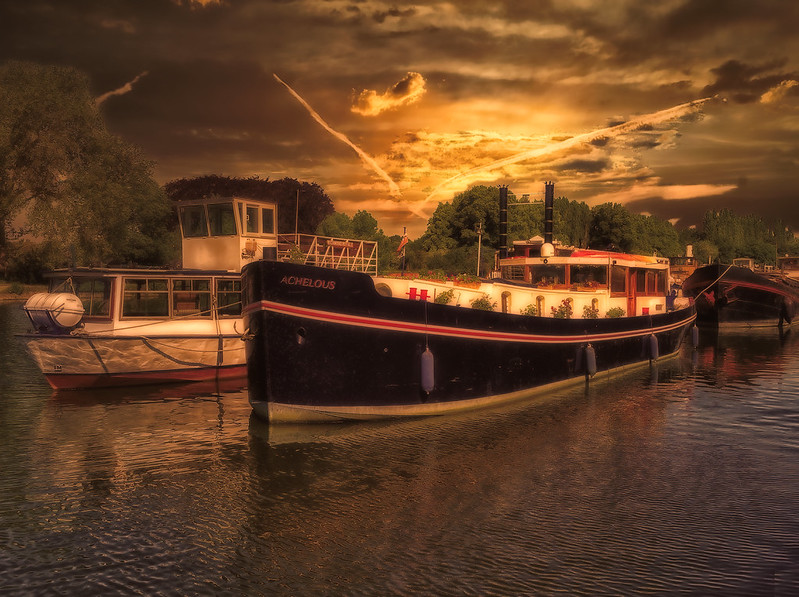
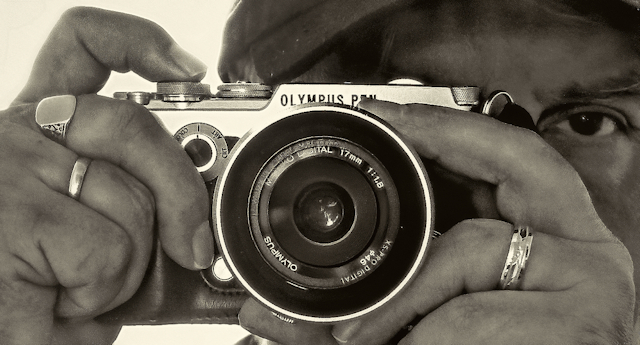
My photographic highlight of the year has been using my Olympus PEN-F camera. Although I still very much enjoy using my OM-D cameras and lenses this camera has fast become my go-to favourite. I have used it throughout the year mostly coupled with my dimunative gem of a lens, the Lumix 12-32mm. This camera ticks all the boxes for me, it’s small, light and fully-featured and a delight to use. It has a very good sensor and features such as electronic shutter and good ergonomics, it feels right in ones hand. I think that if something feels right it really promotes a sense of confidence and enjoyment in using it. So I’ve taken to just carrying the PEN-F and three lenses, the Lumix 12-32mm and 20mm 1.7 and my Olympus 9-18mm. Together they cover 99.9% of my day-to-day equipment requirements. Six out of twelve of the photos in my yearly photo roundup post were taken with the PEN-F and 12-32mm

PEN-F and Olympus 9-18mm

PEN-F and Lumix 12-32mm

Kind regards

Leigh

I Leica :)

Hi everyone,

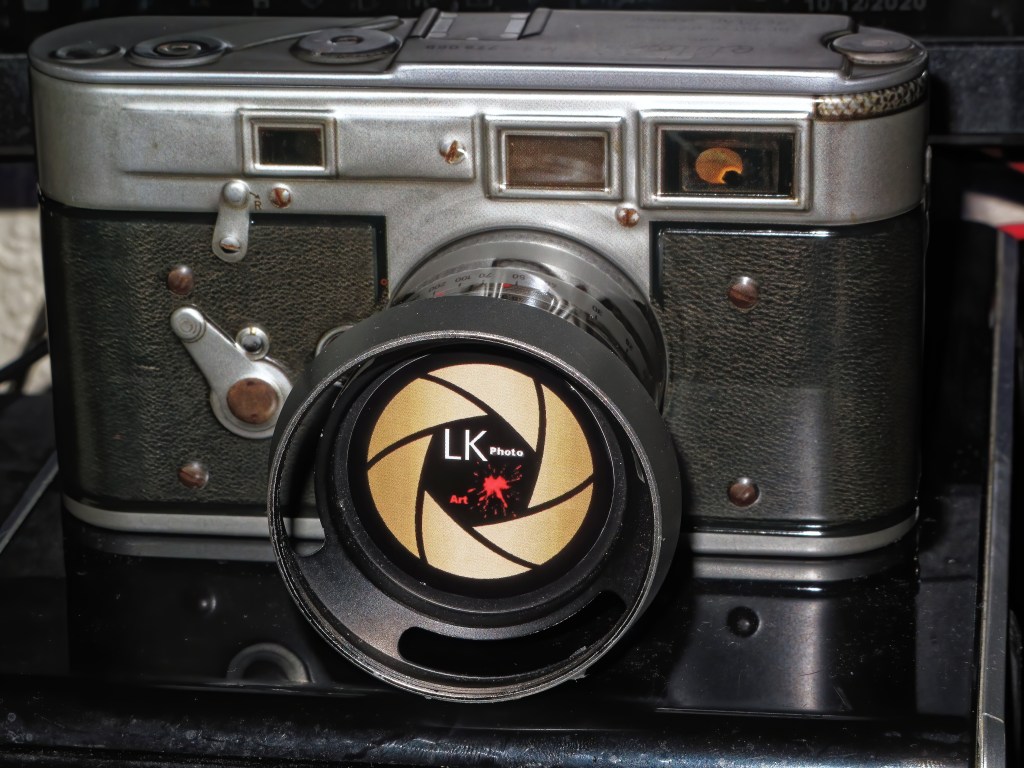
Novelty faux Leica M3 tin added to my eclectic collection of objets d’art. I added a surplus to requirements venting lens hood to complete things.

Best wishes,

Leigh

My quest has ended

Hi everyone,

My long-term quest for a perfect camera bag and rain cover combination to suit my requirements and, heaven knows I’ve tried quite a few, has finally ended. πŸ™‚ A while back I bought several small lightweight Manfrotto camera bags which you might have seen in one of my previous posts and, previous to that, I bought a National Geographic Africa camera bag rain cover. I thought I’d try them out together and, because it has elasticated sides and velcro “loops/straps” to take the camera bag straps, I can leave it fitted all the time without hampering access to the bag. When I need it there’s no fumbling about in the rain fitting it and subsequently removing it, I can simply pull it over the top and, as a mate of mine from Liverpool would say “job’s a good ‘un”. πŸ™‚ It also has the benefit that, when wet, it can stay on the bag to dry out and I have tucked a few small items like my LCD hood and variable ND filter and pouch inside between the cover and the outer of the bag. Incidentally the bag and rain cover combo cost me a very affordable Β£16 UK. πŸ™‚ πŸ™‚

Takes me all of a second or two at the most and the bag is well and truly protected against the elements. πŸ™‚

Wishing everyone a safe, peaceful and happy Christmas and New Year.

Leigh

Discovering my inner sole :)

Hi folks,

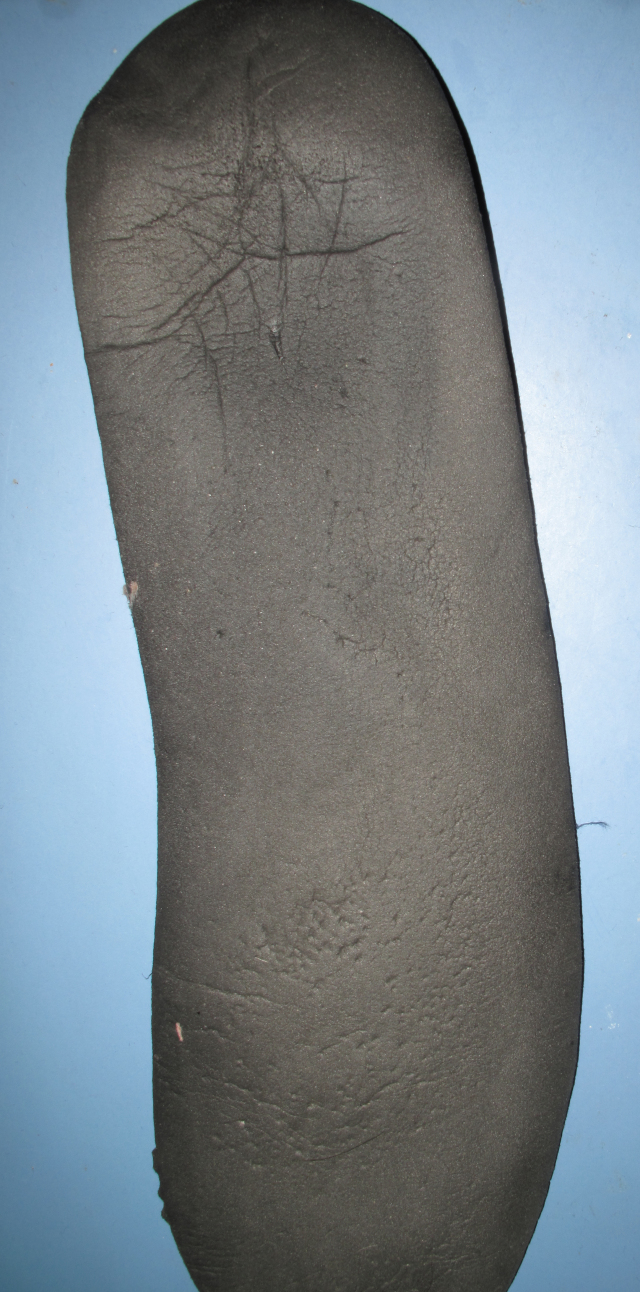
No, not a typo in the title of the post πŸ™‚ . I know what you’re thinking, “he’s finally lost it, I always knew there was something flakey about him”, not so!. A while back I discovered a great and almost certainly the cheapest way to free a stuck filter or screw on lens hood etc. is an old rubber inner sole for a shoe, it’s worked for me every time. Place the sole on a firm flat surface or, at a pinch, against the palm of your hand, press the front of the filter or lens hood against the sole, apply a little even pressure, and turn. The rubber grips and the filter or hood is easily removed without damaging it. If you’re trying to remove a screw on lens hood and it also removes a protection filter simply let it do so and repeat the above with the filter thread against the rubber and turn the hood then you can refit the protection filter. For this reason I cut up an old inner sole into three pieces (FYI I have fairly large feet) πŸ™‚ and I pack one in each of my camera bags. As must have camera accessories go they don’t come much cheaper than this and I have another one just like it if I need it. Cost me nothing as I’d already got good mileage out of them, your mileage may vary, or you could of course really push the boat out and buy new ones! πŸ™‚

innersoul

Kind regards

Leigh


The only filter that I use.

Hi,

I don’t like applying filter effects, or for that matter any effects, to the image when I’m taking a shot or, more usually for me, shots in multiple exposure-bracketed HDR. With this in mind and the fact that I don’t very often want to remove reflections and I enjoy post processing my images and I can change saturation and other parameters, selectively if I choose, as it pleases me, enter stage right DXO Photolab and/or NIK Viveza πŸ™‚ , I don’t carry a polarising filter. As for other filters like graduated filters etc. I can also do this, if I wish, in post processing. Unlike Olympus’ Art filters, colour creator, colour and black and white modes which I could apply to just the JPEG when shooting both JPEG and RAW and discard if I wish, lens filters will effect everything and, if I don’t like the filter effect later, it’s too late as I’m stuck with it or, at the very best, it’d take extra time removing it, if indeed, depending on the effect, that’s possible

The only filter I have with me nowadays, and it doesn’t get very frequent use, at least for most lighting conditions in this country, is my variable ND filter. I think that this type of filter is, by far, the most useful for me.Β  I use it to reduce the light entering the lens and thus reduce the shutter speed when required and still enable me to set my preferred choice of aperture.

A while back I was shootingΒ  down on the banks of the River Wey on a bitter cold early morning straight into VERY bright sunlight and even stopping right down to f/22, which was something I didn’t want to do anyway, didn’t bring the shutter speed down enough for a correctly exposed single frame exposure let alone multi-frame HDR exposures and my ISO was already set to the lowest. This is one case where this type of filter is so useful as it allowed me to get shots that I otherwise couldn’t have got.

My PEN-F using electronic shutter has a fastest shutter speed of 1/16000 sec. which is usually more than fast enough but when I’m exposing +2 and +4 stops in such bright light as was the case here with my OM-D E-M1 mk 1 with its 1/8000 sec. fastest mechanical shutter speed, then it just wouldn’t have worked out without an ND filter to bring the exposure down within limits whilst allowing me to still shoot at my preferred aperture.

46547773152_263e6051ce_c (1)

This doesn’t happen that often which is why the filter only gets occasional usage but it’s good enough reason to have it with me, especially if I’m visiting a hot country. I prefer the variable type as it doesn’t require changing or stacking multiple fixed ND filters and is thus quicker to fit and remove. The one that I have has a larger front filter diameter which prevents vignetting.

Kind regards

Leigh


Lenses, what works for me, what doesn’t and why.

Hi everyone,

For many years now I’ve been very reluctant to go out without a telephoto lens of some sort in my bag, just in case, but I’ve finally decided not to carry one about as, for my interests, I just don’t use them or, if I do, then the number of shots I take with them is absolutely tiny compared to other focal lengths, it’s not that they’re not good lenses it’s just that I don’t end up using them. It’s the norm for me to get back and find that I haven’t used such a lens again all day. I think that it has a lot to do with the way that I compose my shots, the framing and perspective that works best for me or maybe the way that I “see” things.

By far the vast majority of my shots are taken in the moderate wide angle to standard focal length range.Β  I prefer to have an ultra-wide option like my 9-18mm (18-36mm) zoom with me which is very useful, apart from anything else,Β  for multi-frame panorama composites but 12mm (24mm) is as far as I usually require and that’s quite often a bit too wide and this is why I don’t usually pack my M.Zuiko 12mm f/1.8Β  lens as it is too specialised and would get used just about as much as a telephoto would, possibly even less. I know it sounds bizarre, a landscape photographer that doesn’t want to pack a fast wide angle prime lens in the bag. πŸ™‚ . As a general rule I prefer a somewhat tighter framing as the details in very wide landscape shots are pretty small. I like to compose and frame there and then and I very rarely crop in post.

I’ve been raving a lot recently about my tiny Lumix 12-32mm (24-64mm) lens which I’ve got to know very well and it’s so small and light in terms of sharpness, focal length coverage and weight it’s a lens that I can leave fitted nearly all the time without having the requirement to change lenses unless I want to switch to a small faster prime lens like my Olympus 17mm (34mm) f/1.8 or Lumix 14mm (28mm) f/2.5 when the light is very low or my 9-18mm if I need need to go wider or my back’s up against the wall so as to speak, πŸ™‚ as it was ,quite literally, when I was taking these shots taken with my 9-18mm.

49969647991_b3f4395c21_c (1)

49967611726_dbcbf964b3_c (1)

I guess that once in a while I might have cause to wish that I had a longer lens with me but I can live with those very rare eventualities as, after all this time having taken thousands of images, I can speak very much from personal experience, it’s just not worth the extra weight and space in my bag .

Kind regards

Leigh

Comparing apples to oranges.

Hi folks,

During Rob’s Youtube live stream yesterday I started thinking about all the reviews one sees for lenses. I have often read comparisons where the reviewer is comparing like for like lenses of a certain type and focal length. Whilst this is useful if one is looking for help choosing between such lenses it’s not, in my opinion, as useful as comparing a similar, non “PRO” lens with its more expensive rival and trying to evaluate in real world terms the pros and cons of doing so, not the least of which is the difference in cost or as my American fiends call it “bang for buck”. I also think there is an inescapable snobbery where the term Pro immediately screams better and that, in my experience, isn’t anywhere near as often the case as the marketing people would have one believe.

Some would argue that that is comparing apples with oranges well, when I’m looking for a new lens, I want to know how the lens compares with what I’ve already got or if it’s a new focal length how the cheaper and dearer options compare before I buy and then I can make my own decisions on whether the often not inconsiderable difference in price can be justified in terms of better performance, note I said performance and not paper specifications. I don’t often think that the difference is very easily justified. I’ve used lenses which have cost me a fraction of their “Pro” counterparts which have been just as sharp, sometimes sharper and considerably smaller and lighter. Sure the build quality is usually not of the same standard but, if one is careful and takes care of one’s gear then this point is not of such great importance.

Kind regards

Leigh

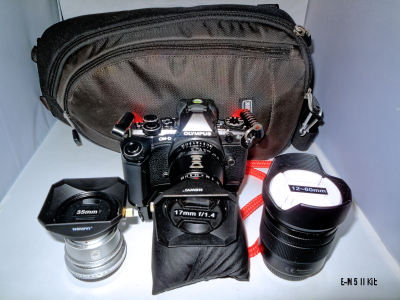
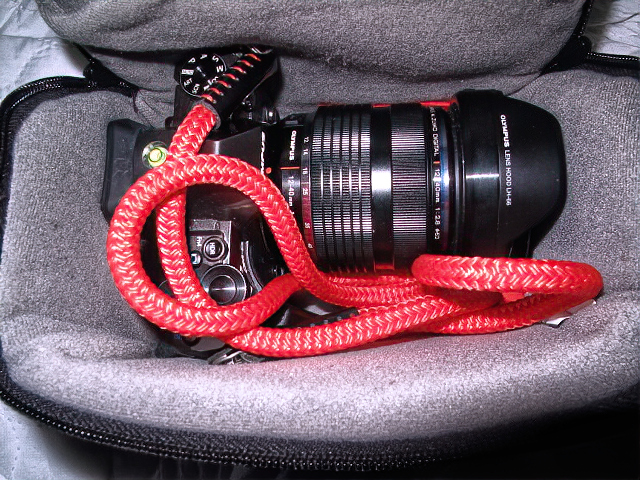
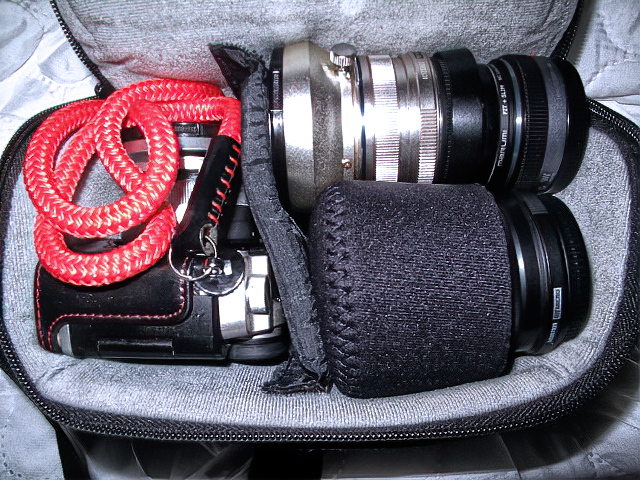
PS. Then there’s the size and weight of the gear to consider. Below my OM-D E-M5 II body fitted with my M.Zuiko 12-40mm constant aperture f/2.8 PRO lens. An excellent weather-sealed combination which I’d certainly prefer to use in very inclement weather. Below this, in an identical size bag, my PEN-F body fitted with my Lumix 12-32mm, Olympus 9-18mm and Sigma 60mm f/2.8 (both packed underneath on the right), Olympus 17mm f/1.8, Lumix 14mm f/2.5 and Olympus 25mm f/1.8, so all my most frequently used lenses packed on top. Five more lenses including faster primes, giving greater coverage, a good degree of overlap/backup and not appreciably heavier in weight compared with my first example.

As my principal interest is in landscapes the 14mm, 17mm and 25mm focal length prime lenses are very useful, the two zooms allow me to go wider and wider still and the 60mm gives me a moderate telephoto option and none of these lenses are marketed as pro lenses and are thus a lot more affordable, especially when purchased second-hand πŸ˜‰ . For my work an f/1.2 or suchlike lens, let alone several of them in different focal lengths, collectively costing thousands of pounds and being very much bigger and heavier wouldn’t be that much good to me. Apart from the fact that I don’t shoot wide open, nor in the desert or rain forest, they’d just end up severely limiting my mobility, hurting my back, my shoulders and, to add insult to injury, my wallet! πŸ™‚

GEAR2_NEWGEAR 1_new

Micro Four Thirds, Landscapes and Depth of Field

Hi folks,

One thing that one doesn’t hear so much about is the increased depth of field that one gets with the micro four thirds system and how this benefits landscape photography. You hear quite a bit about how this effects portraiture where everyone seems to go bonkers about bokeh but, as you know, I’m not in the slightest bit into portraiture πŸ™‚ .

For landscape work (and macro work) this is a distinct advantage for me as I get the equivalent of twice the depth of field for a given aperture compared to a full frame camera fitted with a lens of the equivalent focal length. So if, for example, I’m shooting at f/5.6 with a 14mm lens then I’m getting a depth of field of a 28mm full frame lens stopped down to f/11.0, a difference of two very valuable stops, but I’m also getting a faster shutter speed permitting me to capture shots in lower light and negating the need to possibly have to increase ISO which is especially useful when combined with five stops of image-stabilisation for my handheld HDR shots, a real win-win-win situation. πŸ™‚

I usually stop down two or three stops, depending on the lens, to f/5.6 which is the sweet spot in sharpness for most of my lenses much more and one gets diffraction creeping in inducing softness which is the last thing that I want. If I want softness, and I quite frequently do, then I’ll do it in post.

Best wishes,

Leigh


It just feels so right!

me and pen f 640

Hi folks,

I didn’t think that a camera could ever be this much fun to use. When it was announced a few years back I remember thinking to myself “that’s a beautiful looking camera” but there was no way on earth that I could afford to buy one. Well, not that long ago, I found a mint condition one secondhand for a fraction of the original selling price and I decided to take the plunge.

I’m delighted that I did, apart from its retro 1960’s rangefinder styling, which of course I love, under the hood lies a very modern 21st century, fully-featured, 20MP camera which has every feature that I’m ever likely to require. But the point is that it goes much further than that, this camera makes me feel good using it. I don’t really know how to describe it but it gives me a feeling which I can only acquaint with the feeling that I used to have when using my first Olympus 35mm film cameras. When fitted with a small fast lightweight lens it’s a joy to use, the combination feels very well-balanced and natural in one’s hand with all the frequently-used controls at one’s finger tips. It’s the antithesis of a mobile phone camera. πŸ™‚

The creative dial on the front which allows one to quickly switch between various, default or user-customisable colour and monochrome profiles as well as easily accessible highlight/mid tone/shadow control dial are fabulous creative features. It’s a bit like having a film camera with say Tri-X and Kodachrome or suchlike both readily accessible at the flick of a switch. If one shoots in super-fine JPEG and RAW then one has the best of both worlds, colour RAW and whichever profile that one has selected applied to the JPEG, it’s a win-win scenario. It’s nice to be able to create, save and upload one’s own profiles, something that I’m definitely going to be looking into more.

Don’t get me wrong, I really enjoy using my OM-D cameras which have and will continue to serve me faithfully, they’re excellent cameras, but the PEN-F is something special. Using it is extra-specially enjoyable and when I’m having fun I’m much more likely to feel creative. I guess, maybe, at the end of the day, it’s just as simple as that.

pen-f and 17 mm small

Kind regards

Leigh

Digital tele-converter

Hi folks,

I was running through the menu on my Olympus PEN-F and reassigning some function buttons and I remembered the 2x digital tele-converter function so I assigned it to a button to try out, not expecting much in the way of image quality. I already knew of it but I’ve never tried it, as it turned out I was previously much too hasty inΒ  assuming that it wasn’t going to be of any good.

To my surprise I was very impressed with the results. I did a few test shots indoors with my Lumix 12-32mm at maximum focal length (32mm) with the tele-converter function enabled giving me a focal length of 64mm/(128 mm full-frame equivalent. As it uses the center of the frame which one might expect to be the sharpest and assuming that one has a lens that is sharp in the center then it should be good. In the many videos that I’ve watched and articles that I’ve read I only remember one that mentioned it in passing.Β  This could be very handy when one either doesn’t have a longer lens in one’s bag or the time to change lenses. It really does extend the usefulness of this fabulous tinyΒ  lens even more and it fits in squarely with my travel light ethos. It’s not a true alternative to a longer lens of course but, in practical terms you’ve got to look quite hard to notice the difference assuming that you don’t have your shots blown up to very large sizes. I’ve never been a “pixel-peeper” I’ve got a lot more creative things to do with my time when working with my images. πŸ™‚

A test shot taken at f/5.6, 1/6th sec. @ ISO 800 cropped down to 640×480 for the blog which really doesn’t do it full justice, higher res. shot in the link. If your camera has such a function and you choose to try it I’d be very interested to hear about your findings.

12-32mm at 32mm f5.6 ISO 800 with 2xdigital teleconverter for blog

https://leighkempphotoblog.co.uk/wp-content/uploads/2020/07/12-32mm-at-32mm-f5.6-iso-800-with-2xdigital-teleconverter.jpg

Kind regards

Leigh