Sometimes the simplest things work the best.

Hi folks,

Some month back I found this British-made camera/lens rain cover on E-Bay going for Β£15.99. It’s turned out to be, not only the cheapest but the best rain cover I’ve ever tried, and I’ve tried a few πŸ™‚ . It’s certainly not over-engineered πŸ™‚ , design-wise it’s just about as simple as it can get, it can be fitted in a couple of seconds, no fiddly cinch cords just a simple elasticated end to go over the lens hood and it’s big enough to get ones hands inside to operate the camera and lens controls. It’s also big enough to pull right over the camera and tucks around it between shots when not in use walking around in the rain with the camera hanging from one’s neck.

https://www.ebay.co.uk/itm/134151599456?hash=item1f3c0ef560:g:Q04AAOSwUudg~s1A

Kind regards

Leigh

Using my grip.

Hi everyone,

For my last outing I took my modified pistol grip with me. I think that it does help as I can further brace myself by pulling my elbow into my side and using the trigger shutter release on the grip. I modified the grip, a JJC grip that I’ve had a while, fitted one of my favorite Manfrotto type quick release system thingies, used a cable tie to give the cable some strain relief, taped around the 3.5mm plug end of the cable to seal it and fitted a tripod strap eyelet and Peak Design quick release clip to bottom so that I can attach a wrist strap if desired. I’ve rotated the Manfrotto quick release at 90 degrees to normal so that the plate part on the camera doesn’t obstruct the camera’s battery compartment lid. You might also notice that I’ve superglued the lock shutter button on the side of the grip below the plug in the off position and taped over it as this gets knocked too easily. Works well!. πŸ™‚

All the best,

Leigh

Can’t carry heavier or bulky gear now but I have a solution. :)

Hi everyone,

Long time, no post. πŸ™‚ I hope this finds you all well. I’ve not been able to get out very often but I have more or less finalised my gear choice as largely dictated by my osteoarthritis pain in my legs and lower back. To this effect I’ve got my gear down to what I consider pretty much an absolute minimum.

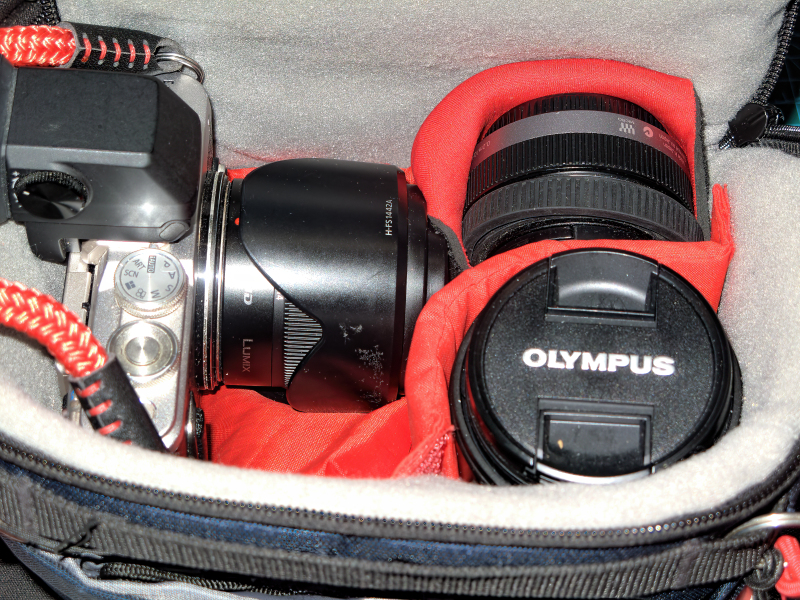
Some while back I bought one of those Tech Pouches by Wandrd. It can accommodate my E-PL8 camera with EV-4 electronic viewfinder and M.Zuiko 12-45mm f/4 lens, a small, fast, prime lens such as my M.Zuiko 17 mm f/1.8 or 25 mm f/1.8 or as shown in the pictures below, my even smaller Lumix 20 mm f/1.7, two or three spare batteries and a small four card SD card case, some lens wipes, a small flash unit and a Manfrotto rain cover, from another of my bags, which fits the pouch perfectly, like a hand in a glove. The prime lens fits inside one of the elasticated pockets inside the pouch’s main compartment as does the flash and thus they’re secure and don’t rattle about. The (NEEWER) battery/card pouch fits neatly in the pouch’s front compartment and can easily be removed if required and placed in an inside jacket pocket to keep the batteries warm on a cold day.

I have to say that I’m impressed with the water-resistant properties of the Tech Pouch which got very wet in a recent outing and everything inside stayed dry but the addition of the rain cover gives me peace of mind to further protect against heavy precipitation. The rain cover has two slits, one on each side through which one threads a shoulder strap. I decided to remove the Wandrd strap and use the one belonging to the Manfrotto bag. Although the Wandrd strap does work, I didn’t much like the quick-release magnetic catch which can and has come apart on occasions and securing it with a couple of cable ties as I originally did prevents attachment of the rain cover. I fitted two carabiners as a temporary measure whilst I wait for some attachable 30mm D-rings to arrive and this arrangement seems a lot more secure and the strap is wider and spreads the weight better.

Below some pictures.

I’m really hoping to get out more when I am able to, Autumn is probably my favorite time of year photographically with the fabulous colours in the foliage.

Kind regards

Leigh

Update: Now with D-rings attached.

10+1 things that I’ve learned when travelling with my photography gear.

Hi everyone,

Some of this is photography-specific and some are general travel tips. Some of it is pretty obvious, some of it perhaps less so. In no particular order:

  1. I always pack a small USB camera battery charger, power bank and a couple of spare camera batteries in my hand luggage. This way, heaven forbid that if the airline manages to mislay one’s hold baggage then at least I can charge my camera batteries even if I don’t have a change of clothes. You see my priority there!. πŸ™‚
  2. Never underestimate the weather even in hot countries it can and does rain so I always pack rain covers for my camera bag, my camera and myself!. Remember also to drink plenty of water in hot countries, I’ve had heat exhaustion twice and, believe me, it really is no fun at all!. Yes, twice, I didn’t learn my lesson the first time, I’ve learned it now.
  3. Unless one’s travelling in style, chance would be a fine thing πŸ™‚ , then expect the hotel room not to have enough power sockets to charge one’s gear. So I always travel with a small multi-voltage 5-port USB charger and cables which allows me to charge all my devices from one wall socket. It also means that it’s a lot quicker and less time-consuming to charge multiple devices simultaneously and the USB chargers are so much smaller and lighter to pack.
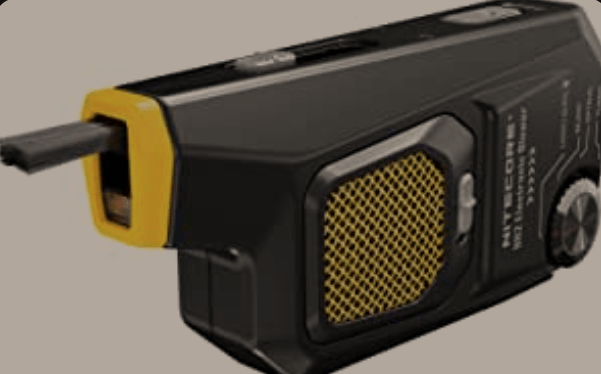
  4. Pack a small torch, I have a small, thin, pen torch which charges from USB. I’ve had more than one occasion to be thankful for having a torch with me.
  5. Remember not to pack batteries and power banks in one’s hold luggage as the airlines have strict regulations about this kind of thing, check with the airline to see the latest regulations regarding what’s allowed and not before packing.
  6. I’ve taken to packing a couple of extra lenses in my hold luggage so as to act as backup and also extend my options. One never knows when an unexpected opportunity might arise. For example I visited a Zoo when in Portugal, now, if I’d only have had a telephoto zoom lens with me I could have packed it for the day and left it at the hotel when I knew that I wouldn’t need it which was pretty much most of the time.
  7. Not photography-related but make sure that you pack an adequate supply of all and any prescription medications, a small first aid kit – sticky platers etc., passports and all travel documentation, boarding passes etc. and don’t forget to check to see what COVID certificates are required by the country you are visiting else you might have a very short stay!.
  8. Make sure that you have travel insurance, which covers the value of your equipment and belongings and covers you for medical treatment and medical emergencies as well as health cards like the GHIC card or equivalent. Start your travel insurance cover from the date that you book and not the date that you are travelling and make sure that you apply for any travel documentation in good time before travelling.
  9. I usually pack a tiny USB-rechargeable data logger, about the size of a pocket box of matches. When returning from one’s travels and looking through hundreds of images it’s so easy to forget where they were taken and even more so when doing this weeks or months later etc.. Set your camera time and date accurately before leaving and, on return, use a program such as Geosetter on the PC to match the GPS track/s data time stamps and add the geographic co-ordinates to the EXIF data of all of your images. I start a new GPS track every day when setting off on the day’s travels.
  10. Every day on return to the hotel I use a backup device to copy the content of the camera’s SDHC card onto a flash drive. I also find that it’s good practice to use a new card every day and store the used cards and flash drive/s in the room safe. This way, if the camera gets stolen or the memory card gets corrupted at least you haven’t lost all of your shots.

+1. Lastly, keep your wits about you when visiting popular tourist hot spots and tightly packed spaces like public transport etc. as these attract pickpockets and thieves like flies to you know what. πŸ™‚ Stay safe and be conscious of those around you who might want to part you from your money and/or your belongings. Don’t put all your eggs in one basket or, to put it another way, don’t put all your money and cards in the same pocket/wallet/bag etc. and only take out with you what you think that you’ll need for the day, that’s what hotel room safes are for. πŸ™‚ If I’m seated at a restaurant or bar etc. then I place one of my legs through the strap of my camera bag when it’s sitting on the ground under the table. There’s no 100% foolproof way of avoiding all possible risks but there definitely are ways of making oneself more vulnerable.

I don’t claim this to be an exhaustive list but simply some tips that have served me well over the years.

Best wishes,

Leigh

The beauty of Micro Four Thirds

Hi everyone, I’ve not been able to get out much and our Summer trip to photograph the beautiful Cornish landscapes has very disappointingly had to be cancelled. I’ve been taking some time to refine my gear choices. This is all that encapsulates Micro Four Thirds for me, one body and three tiny, lightweight lenses with some spare batteries in my Wandrd Tech Pouch. The pouch is pretty water resistant but, for good measure, I’ve popped one of my shower cap/rain covers in the front pocket which fits perfectly. πŸ™‚

Kind regards

Leigh

PS: – An alternative and equally small loadout with coverage from ultra-wide angle to medium telephoto, M.Zuiko 9-18mm, Lumix 14-42mm II and 35-100mm. I managed to get the lens hoods for the 9-18mm and 35-100mm in the front pocket. I think that this would make a great ultra-compact travel kit, the pouch doesn’t scream camera gear. πŸ™‚

Camera Rain Covers, love ’em, hate ’em.

Hi everyone,

Camera Rain covers, if it rains/snows heavily and you’re walking about and like me, you want to protect your gear and you’ve not got one with you you’ll be cursing your luck or be prepared to play Russian Roulette with your gear. If you have got one then you’ll be thankful in a way but probably quickly be cursing how they work.

If you search the Wibbly, Wobbly Web for camera rain covers you’ll find loads of different types and makes so why is it that I’ve not found one yet that ticks all my boxes?, surely it can’t be that difficult can it?. Many it seems are made to fit a small elephant, some are nothing more than a flimsy plastic bag, some cost an absolute fortune (and are way too big) and they’re all ridiculously impractical for my use for one reason or another.

As a user of small Micro Four Third cameras and small, short prime and zoom lenses I wish that someone made what I need. I’ve now got three camera rain covers, I’m not counting my first attempt which has long since been re-cycled, hopefully into something/anything more useful πŸ™‚ , all of which don’t work well for me for different, though broadly overlapping reasons. My Thinktank “Emergency Rain Cover (small size) isn’t too bad size-wise, still a bit big though, but not so good to hand-hold and much better suited for a tripod, it also lacks an integral strap or any way of attaching one and the front lens opening doesn’t cinch down small and tight enough for 99% of my small lenses.

Then there’s my small-size Manfrotto-badged rain cover which is also too big, even more cumbersome and slow to fit/remove and, again, lacking in any strap mount . In their defense I will say that both of the aforementioned do at least allow one to get one’s hands in and operate the zoom and/or focus ring and incorporate a transparent panel allowing one to see the controls and viewfinder unlike my third cover, the Peak Design Shell small size.

I’ll say in fairness to them, that it’s well made and they don’t claim that it’s so much a rain cover as a means of transporting the camera in the rain, (if that’s all I want to do then I’ll keep it in my waterproof camera bag), but they do claim that the camera can be used with the shell fitted and that’s where it falls well short of working for me as it’s very difficult, nigh impossible, to turn a zoom or focus ring and the cover has to be pulled back exposing the viewfinder/screen and to operate the camera controls. It’s worth noting that all of these products are, size-wise supposed to be designed for MFT/CSC cameras, which prompts me to think, how big do they think a typical MFT camera body and small lens is?.

What would be my perfect rain cover given my choice of camera equipment and shooting preferences?. Apart from being water-proof which I hope that one should be able to take for granted. Firstly it has to be big enough to get one’s hands in and operate the camera and lens controls without being designed for a lens the size of a bazooka. Next it has to have a window to view the viewfinder/screen and controls. Then it has to either have an integrated strap, a way of attaching a strap or even better, for me, allow my Peak Design strap connectors to pass through which is, for me, the only really good bit of the Peak Design Shell. Lastly it has to be quick and easy to fit and remove, compact to transport in a small camera bag or a coat pocket and allow for access for changing camera battery and/or memory card when required. I do try to always ensure that my battery and card have the required capacity before fitting a cover as one really doesn’t want to be messing about in the rain changing these. This doesn’t sound that difficult does it?, so how come I’ve not found one yet that ticks all these boxes?. My quest continues, for now I’ll keep using my Thinktank cover as it’s the nearest to best one that I’ve got. If they could down-size it a fair bit, add a strap or facility to fit a strap and make the cinch around the front of the lens a fair bit smaller then this would work well for me I think. So much so that I e-mailed them my suggestions, I can’t be alone in desiring something like this.

In-lieu of not being able to fit a neck strap I’ve taken to using a wrist strap which I can quickly swap to from my neck strap using Peak Design connectors but I’d prefer to have it hanging from my neck and not to have to hold the camera all the time but it does at least offer a degree of protection from drops when walking around.

Kind regards,

Leigh

Additional. Credit to Thinktank they quickly acknowledged my product suggestions and the requirement for something like this and will pass them on to their design team, here’s hoping. πŸ™‚

Just me rambling on. :)

Hi everyone, hope this find you all well.

Weather-sealing is very useful but, if one wants to have it in a M.Zuiko lens, it inevitably means having to buy very expensive and too heavy (for me) PRO series lenses. I guess that I’ve gotten increasingly used to the beauty of small, light, lenses and even my new M.Zuiko12-45mm f/4 PRO lens seems heavy again by comparison, although blissfully not as heavy as my 12-40mm f/2.8 PRO. Optically, it seems very good, given my limited opportunity to test it and it will probably be the lens that I take on my travels this year but I’m not really looking forward to carrying it around on foot all day despite its comparatively small size whereas, by comparison, my Lumix 14-42mm is so light, covers virtually the same range and is optically very good but not weather-sealed.

It’s a trade off for me, carry something lighter, increase my mobility, decrease my pain and ultimately increase my happiness and get more shots or something heavier that’s got weather-sealing and, arguably better image quality, which limits my mobility and get fewer shots due to increased fatigue. As the old saying goes, at least for me, it seems like, “one can’t have one’s cake and eat it”. πŸ™‚

I wish that OMD would make a range of non “PRO”-branded lenses with weather-sealing. I’m not bothered about them being fast lenses like their f/1.2 series. At the moment there’s a considerable gap between affordable, lightweight f/1.8 non weather-sealed lenses and f/1.2 heavier, expensive, weather-sealed prime lenses and the gap is there with their zooms as well. I’ve also worryingly started to drop things, I’ve dropped three lenses recently albeit indoors on carpet and, fortunately, they’ve all survived, I find that my grip just goes without warning. πŸ™

I’m more than happy with the image quality of their old “Premium” series glass, I just wish they had thought to incorporate weather-sealing in their designs. Broadly-speaking Fuji got this right!. I’d love OM Systems’ 20mm f/1.4 PRO for its weather-sealing and it’s a really interesting focal length, not interested in the f/1.4 bit, that much although useful in poor light of course, but it’s way too costly and, most importantly, too heavy.

IMHO all camera gear should be made with at least a degree of weather-sealing including lenses which should always come with a lens hood and some form of case, something that Olympus don’t provide in the price except with their “PRO” lenses and even then one doesn’t get a case. Panasonic, Sigma etc. however generally do. I guess it comes down to Olympus/OM Systems moving in one direction design/marketing-wise and I’m moving in another direction preference-wise. πŸ™‚ The latest lenses and, particularly cameras, are offering me more and more features that I don’t require or want but not those that would be of the most interest and benefit to me.

Kind regards

Leigh

First test of M.Zuiko 12-45mm f/4 PRO lens.

Hi everyone,

I took my new M.Zuiko 12-45mm f/4 PRO fitted to my Olympus E-M5 II for a spin today to test it out. Very impressed with the images, sharp corner to corner and the close focusing is a bonus.

“Close Up”
“Shelter”
“Stonewalling”
“0%ABV!” πŸ™‚
“The lost shoes”

Kind regards

Leigh

For my next trips

Hi everyone,

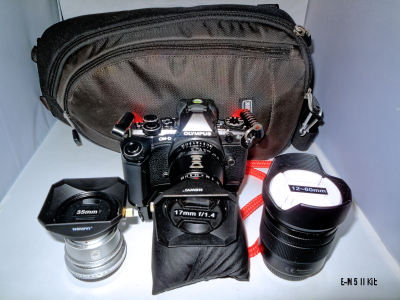
For my next trips. E-M5 II, M.Zuiko 17mm f/1.8 and my new M.Zuiko 12-45mm f/4 lens. Should make a nice lightweight selection for travelling. πŸ™‚ A weather-sealed body and lens combination and a faster prime for low light/indoor shots. Although generally-speaking I prefer the 25mm FOV I’ve chosen the 17mm because of its wider angle. This is useful in indoors situations and it’s also good for landscapes and architecture. I’m not a street-shooter but, using zone focusing set the aperture to f/5.6 and set the focus to 3m and everything between 3m and infinity is acceptably sharp. I do like to have a depth of field scale on a lens like this. Like some of their other lenses it also has a manual focus clutch which enables switching between auto focus and manual focus very quickly. I’ve always disabled it in the camera settings as I find it far too easy to accidentally move especially when attaching and removing the lens and I prefer a function button dedicated to toggling manual focus suits me better.

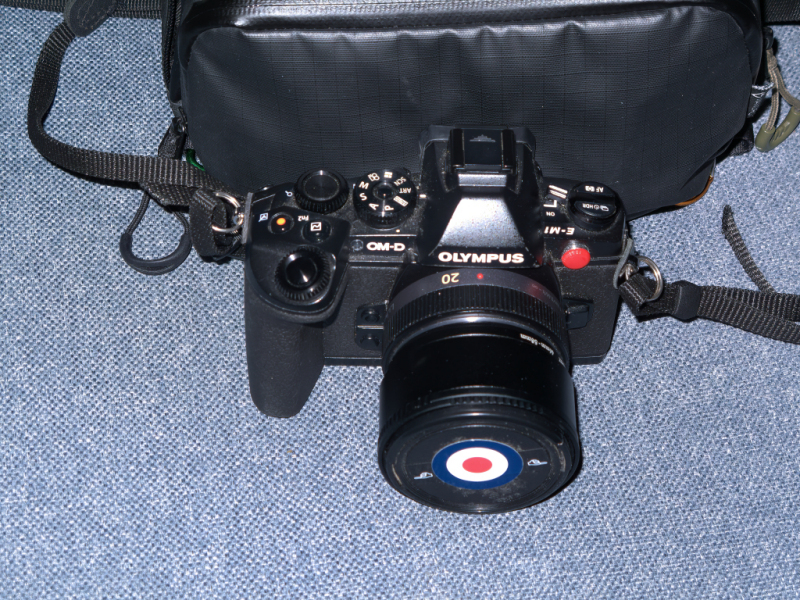
You might also notice that I’ve added a half-case to the camera which adds negligible weight. It protects the camera especially the base of the camera, the tripod thread and the somewhat delicate and vulnerable battery door which I’ve already replaced once. It also removes the possibility of the small rubber “bung” that protects the contacts for the dedicated grip falling off and getting lost and as it pretty much covers the rubber cover over the HDMI and USB sockets which I don’t use often, preventing it from accidentally opening and thus further helps with the weather protection. It improves one’s grip without having the added extra bulk and weight of a camera grip and lastly it looks darned smart, the black faux-leather with red stitching matching my choice of camera strap. πŸ™‚

Snug as a bug in a rug for transporting in one of my small Manfrotto shoulder bags.

Kind regards,

Leigh

I’ve ordered a new lens: Olympus M.Zuiko 12-45mm f/4 PRO.

Hi everyone,

Recently I’ve been experimenting a lot with different selections of lenses. Yesterday I took out my PEN-F camera with three lenses, my Lumix 12-32mm and M.Zuiko 17mm and 45mm f/1.8 lenses. For ages now I’ve known what works best for me in nearly all situations and my personal style. All I really need is a “standard” zoom covering moderate wide angle to moderate telephoto and maybe a fast lightweight prime like my 25mm f/1.8. I find the 17mm too wide to leave fitted all the time and, useful as the 45mm focal length occasionally is, and bearing in mind that I don’t habitually do portraiture or people shots, the same is true. The 25mm lens with its full-frame equivalent 50mm, “nifty-fifty” field of view works best for me, probably something that has stuck with me since my film days as most cameras came with one and thus it was one’s first lens and, not by coincidence, it was the first Micro Four Thirds lens that I bought.

Yesterday proved the point to me once and for all, I shot with all three lenses and particularly the 12-32mm but made a point of using the 45mm and to a somewhat lesser extent the 17mm lenses. I was changing lenses all the time, too often for my liking which significantly slowed me down and I missed one of my other standard zooms like my Lumix 14-42mm II, Lumix 12-60mm or M.Zuiko 12-40mm f/2.8 PRO all of which are very capable lenses which I’d very happily shoot with. I gave up using the 12-40mm PRO some while back, not because it isn’t a good lens, it is a very good lens and it has weather-sealing but it’s too heavy for me nowadays and a bit front-heavy on my smaller MFT camera bodies. I took my 12-40mm to Malta, Brussels, Rome, Corfu and Prague and my 12-60mm to Bruges/Ghent and Porto/Lisbon and they both performed admirably so I know that a lens in this range pretty much ticks all the boxes for me when travelling.

I’ve chosen to buy an M.Zuiko 12-45mm f/4 PRO lens which I found at a very tempting price. This lens covers the focal length range I most frequently use, it’s lighter than the 12-40mm albeit a stop slower, which doesn’t worry me at all, but it has weather-sealing and a useful close-focusing capability of 12cm at 12mm focal length and, here’s the clincher for me, at 7cms (2.8″) in length and weighing only 254g (9 oz), it’s a fair bit smaller and lighter than the 12-40mm. I have faster standard zoom lenses (M.Zuiko 12-40mm), I have significantly smaller standard zoom lenses (Lumix 12-32mm), I have lighter standard zoom lenses (Lumix 12-32 and 14-42mm) but I don’t have a lens in this range that has this combination of size, weight, performance and weather-sealing. I think this lens is a very good move by Olympus, not all off us want faster, heavier, bigger lenses and dreamy bokeh!. πŸ™‚

I’m really looking forward to trying out the new lens when it arrives, it just could be my new go-to lens, especially when travelling married to one of my favorite smaller camera bodies such as my PEN-F or more probably, primarily for it’s weather-sealing, my Olympus E-M5 II camera. This combination along with my 25mm lens fits in squarely within my self-imposed 1Kg weight limit at 860g or 1.9 lbs. :), marginally lighter than a bag of sugar and every bit as sweet!.

Kind regards

Leigh