Silicone lens cap try out.

Hi everyone,

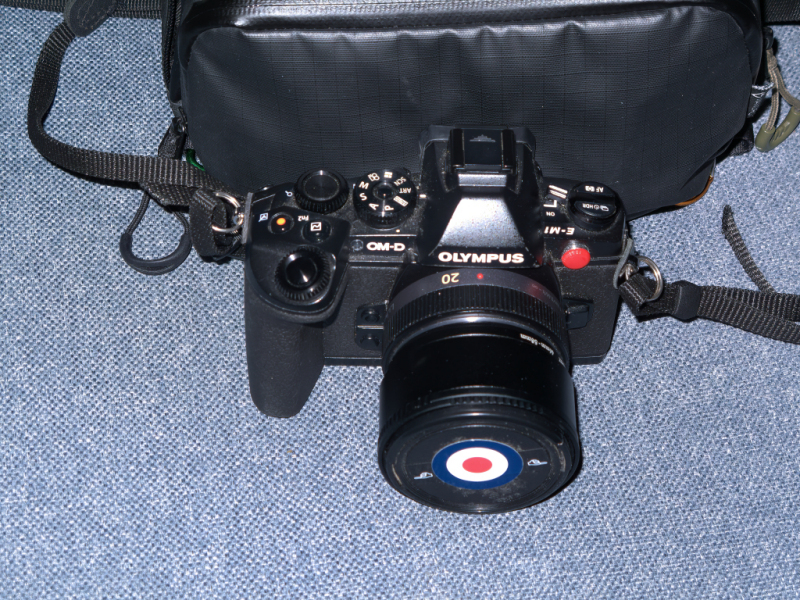
I thought I’d invest in one of those silicone lens caps for my Lumix 20mm f/1.7 lens, lens hood and XUME lens adapter combo. I carefully measured the outside diameter as a maximum of 62mm and found one going for a temptingly cheap price. I noticed that one can pay significantly more for brand names so I thought I’d dip my toe in the water and get a cheap one to try out and see how it lasts. I’m not so interested in the claimed waterproof properties as the lens isn’t weather sealed and doesn’t have a rubber sealing ring on the lens mount but it might help with some added protection when the camera and lens is in the bag or maybe to slip on quickly if caught out in light rain, better that than nothing. They say it fits from 60mm to 110mm but I think that it’ll probably split if stretched too far and too often, this size is perfect for my requirements and easy to get on and off without much stretching but tight enough to stay on, tighter than a traditional lens cap for sure and it won’t fall off. I’m not bothered about it offering any additional protection from knocks as, with the hood fitted, the front lens element is well and truly recessed but I suppose it would offer a small degree of cushioning. If two solid objects collide I can’t see it as being a bad idea to have something made from rubber between them.

Best wishes,

Leigh

Wandrd tech pouch re-visited.

Hi everyone,

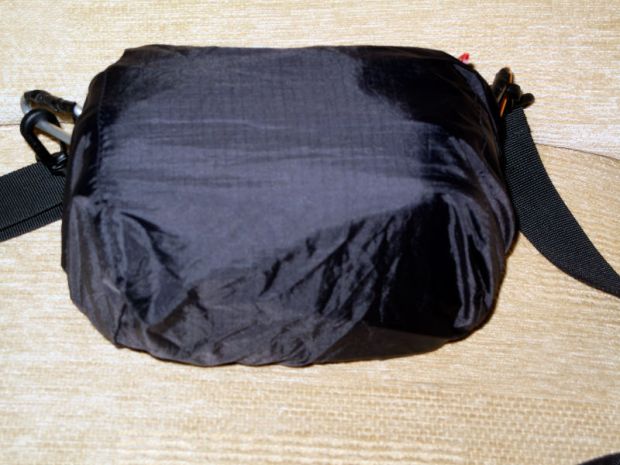
I know that I’ve posted about this great little lightweight pouch/bag before but, now that I’m just taking one small camera and lens out it’s really come into it’s own. I have the larger size, the fabric is very water-resistant, I know, I speak from experience as it got thoroughly drenched on one occasion when I was out in heavy rain. Unlike myself, the gear inside thankfully stayed dry but, as I’m more than a bit paranoid about such things, I found a rain cover from one of my small Manfrotto bags which fits it perfectly and is there if I need it in the event of a really heavy downpour. In order for it to be fitted I added lockable metal D-Rings to the pouch and used one of my clip on bag straps. Although I wasn’t ever a Boy Scout I think that their “be prepared” moto isn’t a bad one. πŸ™‚

It’s nice because it’s well made, small, light and inconspicuous and doesn’t draw as much unwanted attention as a dedicated camera bag as I suppose that it probably looks like a small “man bag”. Not that I’ve ever had a man bag, no macho rambo esque rubbish here it’s just that I like pockets, a concept, like the offside rule in football, that my loving wife has never fully understood, one of her favourite sayings being whenever I try and explain such things, “I have a feeling that I should be more interested in that” πŸ™‚ . She’s got her handbag which we laughingly joke about equating to Dr Who’s TARDIS in terms of the amount of things in it compared to it’s apparent size. Men (like me) like pockets, lots of pockets, preferably zip up pockets are good πŸ™‚ . It’s the same as clothes, men keep clothes, it’s why when one goes into a charity shop there’s rails and rails of women’s clothing and maybe a small rail with men’s, “If you don’t throw that out I’m leaving you!” clothing on it. πŸ™‚

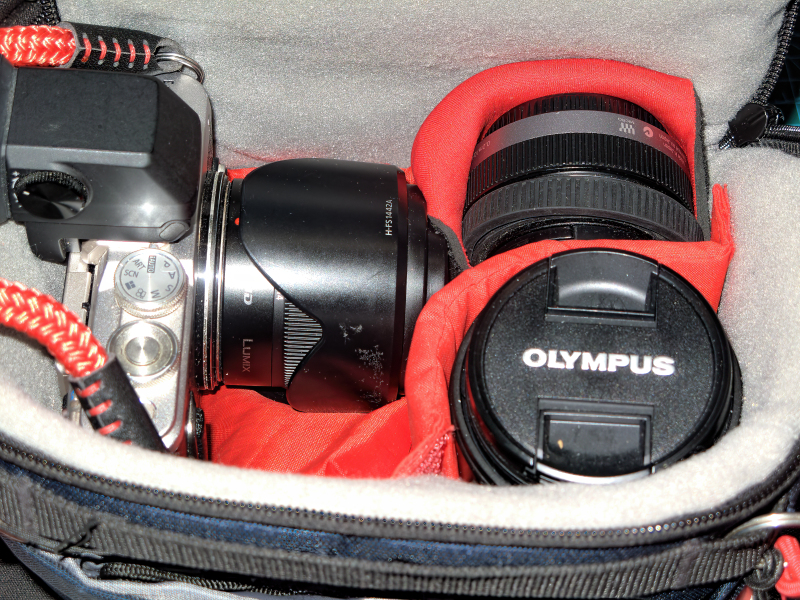
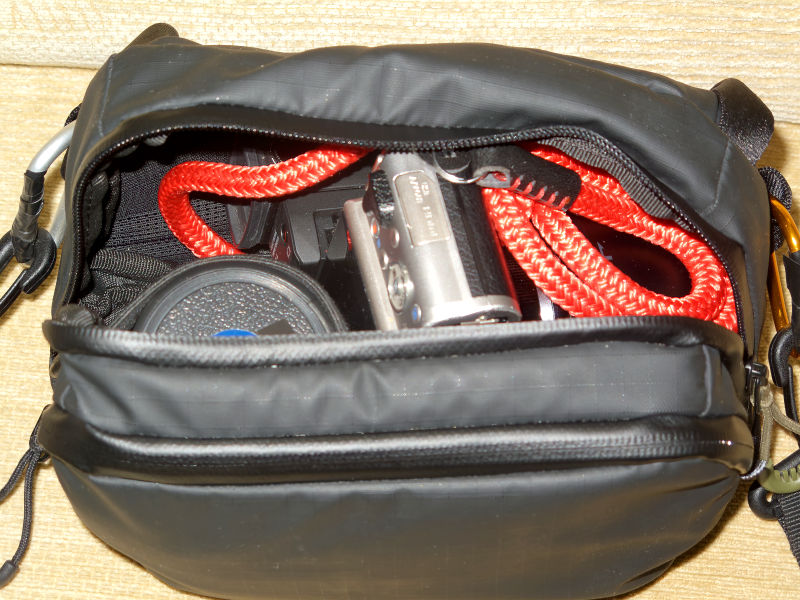
Anyway, I digress, back to the tech pouch, I think that it’s an ideal way of carrying a small Micro Four Thirds or similar sized camera and lens with a few small accessories as it has two zip up compartments, the main one with a few additional elasticated mesh pockets which I’m using for a spare battery, some lens wipes and a filter and a well thought out soft-lined front compartment, lined so that it doesn’t scratch a mobile phone’s LCD screen, glasses, sunglasses etc.. All-in-all I think that it’s a great little bag, intended for those that have a need to carry their tech gear around but equally well suited for my purpose. The picture below shows the pouch with my Olympus E-M1 Mk 1 camera with strap and Lumix 20mm f/1.7 lens plus after market lens hood fitted which fits comfortably in it as would any of my small prime lenses such as my Olympus M.Zuiko 12mm f/1.8, 17mm f/1.8, 25mm f/1.8 or 45 mm f/1.8 or maybe my tiny Lumix 14 mm f/2.5 or 12-32mm lenses.

Best wishes,

Leigh

Why do I shoot HDR?

Hi everyone,

One of the first things that I ever read about HDR was, “you can’t shoot HDR handheld, you have to have a tripod”. Well, when I read the words you can’t do something it immediately triggers the rebel without a cause “why the heck can’t you?” reflex in me. πŸ™‚ So, given that I have a real dislike of tripods, I though, let’s go out and try and since then it’s become pretty much a way of life. It took me a while to hone my technique and work out what works best but it can certainly be done.

First of all it’s not suited to fast moving objects so I wouldn’t try and photograph a high speed train or suchlike using HDR but otherwise it’s fine. What works for me is the following when shooting 5-frame HDRs at +/- 2EV with one +/- 1 EV brackets.

To avoid camera shake which, as you know, is going to ruin any shot HDR or otherwise, keep in mind what the slowest shutter speed is going to be when stopping down 2 stops. If absolutely necessary raise the ISO a bit. The opposite can rarely happen on a VERY bright day with the faster shutter speed exceeding the limits and an ND filter will fix it but it’s got to be more that 1/8000 or 1/16000 of a second depending on my camera choice for this to be a factor for me, maybe in the Sahara Desert but not very often in Northern Europe! πŸ™‚ . Keep as steady as possible between shots to facilitate good alignment of the images, if you can brace yourself do so. If you have a camera with REC view turn it off as it’s really disconcerting seeing the shots as they’re taken and completely mucks things up. I don’t photograph in artificial light and/or fast moving objects so I use the camera’s electronic shutter feature which is fine and it eliminates mechanical shutter wear especially as I shoot a lot of images. Set the camera’s bracketing mode to the desire number of brackets and the bracketing step and also turn on high-speed drive mode, silent shutter if possible. ,Lastly I use Skylum Software’s “Aurora 2019” the best HDR software that I’ve ever used and it does an absolutely fantastic job of assembling the frames, image alignment and anti-ghosting.

Here’s a scene I recently photographed, firstly the five frames taken and +/- 2 EV in 1 EV steps.

Here’s the first of these frames taken with no exposure compensation, straight out of camera with no processing.

Now an HDR of the 5 frames assembled in Aurora, again with no additional processing. This is much closer to what my eyes saw when taking the shot.

This is a starting point for me to process as the mood takes me. πŸ™‚ . So, if you haven’t already, go out and try it, you might be pleasantly surprised!.

Kind regards

Leigh

PS. If you have a look at my recent post “Bright and Cold”, the cars and the people walking down the road were all moving as were all the leaves on the trees in this one!.

Going back to my roots.

Hi everyone,

Back in the 70’s when I got my first serious camera a 35mm Olympus OM-1 manual film camera with the then pretty much obligatory 50 mm f.1.8 lens the one thing that I remember above all is the fun of having a one camera one lens lightweight setup which felt so natural in one’s hand and was a joy to use. Sure over time I bought other and more specialised lenses as I have with my modern gear but there’s something liberating and fun about that kind of gear.

So, trying to dismiss any feelings of nostalgia and being objective, I’ve decided to do just that all over again with one of my favourite cameras and lenses , my Olympus OM-D E-M5 II and my Lumix 20 mm f/1.7 (40mm equivalent) lens. I will also take my tiny Lumix 14-42 mm II zoom, a very capable lens in it’s own right, as it weighs next to nothing at 3.9 ounces! (I love plastic) πŸ™‚ and it’s there if I feel that I need it but it is my intent to try and stick with the 20mm as much as possible. The other reason for taking the zoom is that, mobility-wise I cannot zoom with my feet like I used to and my opportunities to get out and take photographs have become quite rare and I really want to be covered if I’m somewhere when I need other focal lengths but not at the expense of lugging heavier gear around.

I know from years of experience that this focal length range feels the best and most natural for me with the sweet spot more or less right in the middle at about 20mm thus I almost certainly should be able to capture just about everything that I want. One thing is for sure it’ll be a lot of fun and, when it’s fun, it not only feels better but like as not ends up with some of my favourite “keeper” shots. Photography is as much about state of mind as it is anything else.

Kind regards,

Leigh

As promised… shot with my M.Zuiko 40-150mm f/4-5.6.

Hi folks,

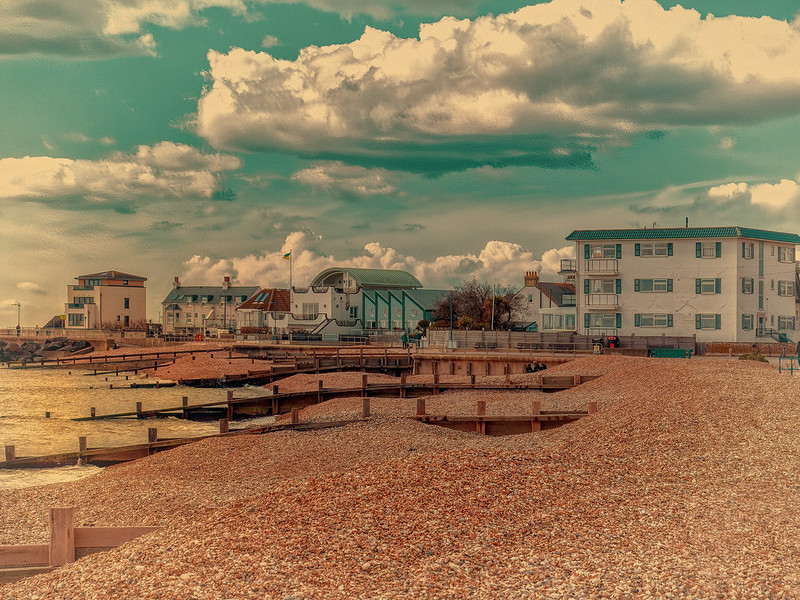
As promised, one of my shots taken today of the River Adur in Shoreham-by-Sea with my Olympus E-PL8 and M.Zuiko 40-150mm f/4-5.6 lens @f/5.6, as usual 5-frame handheld HDR. It’s going to take a while for me to get used to using longer lenses in landscapes but it’s a start. VFM-wise one of the best Β£80 odd quid that I’ve ever spent on a bit of photographic gear πŸ™‚ .The pistol grip also came in useful not only for added stability but also to get the angle held high above the bridge’s tall barrier. The lens is sharp but, I often, as here, like to introduce some softness and diffusion in my landscape shots as it’s less clinical looking and more atmospheric, I think it’s a case of finding the right balance. A nice thing about the Micro Four Thirds system for landscape work is the increased depth of field for a given aperture when compared to full-frame sensors which works to one’s advantage without having to stop down further resulting in slower shutter speeds, something I definitely don’t want when shooting handheld HDR and, ultimately, introducing unwanted diffraction, I’m not looking for creamy smooth bokeh, I’ll leave that to my portraiture brethren :). More to follow ASAP.

Kind regards

Leigh

The beauty of light

Hi everyone,

Not what you may be thinking from the title of this post, I’m referring to travelling light. Without labouring the point, as many of you are already aware, my mobility problems have caused me to continuously rethink my gear choices, I’ve been a long-term fan of lightweight gear and this has exaggerated things further. There maybe some compromises to be made but I really don’t care or think that, in terms of image quality, they are very significant especially so if one is prepared to invest some time and effort in processing one’s images.

Most of my photographic gear has been purchased second-hand, at least two-thirds of my lenses and all but one of my cameras and that makes the budget-friendly gear options especially regarding lenses even more financially satisfying. Whilst waiting to get out hopefully tomorrow I have decided to make a few changes to my intended gear for the outing. I have changed my camera choice to my Olympus PEN E-PL8 + EV4 electronic viewfinder camera which is lighter and smaller but still does everything that I require and my choice of telephoto zoom lens to my Olympus 40-150mm R f/4-5.6 whilst keeping with my Lumix 14-42mm II and 20mm f/1.7 lenses all in one of my small Manfrotto camera bags.

I always take gear reviews with a healthy pinch of salt, that’s if salt is regarded healthy these days πŸ™‚ but if one reads around it’s difficult to find bad reviews of these lenses, optically and value for money wise, they’re all sharp and punch well above their weight and are great choices when putting together a versatile, lightweight travel kit. I am very much guilty of not using my longer lenses very much, something that I’m very keen to put right. One can pickup the 40-150mm lens new or split from a kit for a laughably cheap price, let alone second-hand, if I remember correctly I paid about Β£80 new for mine, possibly less πŸ™‚ . when compared to the cost of it’s PRO series equivalent , constant aperture f/2,8 lens which costs an eye-watering circa Β£1200 and weighs in at 760g (without tripod adapter / 880g (with tripod adapter) . I’ll let you form your own conclusions as to whether the price difference is reflected in their relative optical performance. Sure the Pro lenses have weather sealing, undisputedly better build quality are faster and are optically better, (at least on laboratory test charts) but they are, by comparison, a hell of a lot heavier and extremely expensive. If, and it’s a very BIG if, I had the funds, health, transport and my photographic interest were different, would I buy them, maybe so but, for my every day on-foot requirements certainly not so. I’ll leave the pixel-peepers and gear-heads to their devices, I’d much rather be out taking pictures. πŸ™‚

Never once have I been asked which camera or lens I have used for a shot. As we all know, it’s not the gear it’s the image, if it appeals then it appeals, if it doesn’t it doesn’t and let’s face it, the quality of imagery that modern camera equipment is capable of producing is extremely high and certainly better than the gear I was using years ago but the principals remain exactly the same and there is, as the saying goes “no substitute for experience” whatever one’s choice of gear.

Kind regards

Leigh

Gear choice for my next outing

Hi everyone,

Whilst I’m waiting to get out and get some shots I thought I’d choose my gear for my next outing as there are a few ideas I’d like to try out. I’ve chosen to take my trusty and much-loved Olympus PEN-F MFT camera and three, lightweight (as always), lenses, my Lumix 20 mm f/1.7, 14-42 mm II and 45-150 mm.

Firstly, packing my 45-150 mm is a bit of an odd choice for me as I don’t really take many shots with telephoto lenses and they’re not my first, and more obvious, choice for landscapes and it could be interesting doing some landscape shots with this lens. During my recent ill-fated trip to Spain I fell back in love with my Lumix 20mm pancake lens as a very capable lightweight walk about lens and I’m keen to continue with using it as such. The focal length is an interesting one as it sits between 35 mm and 50 mm (in 35 mm terms) lenses. For me, it’s a bit of a Goldilocks lens as 35 mm focal length is frequently “just too wide” and the 50 mm focal length is “just too tight” and the 20 mm (40mm equivalent) focal length more than often feels “just right” πŸ™‚ and of course good in low light too. Its autofocus isn’t the fastest in the World and it can occasionally hunt for focus neither of which bother me unduly as it’s very sharp, ultra-compact, lightweight and fast. Lastly, I’m going to take my JJC pistol grip/remote and see if I can use it to hopefully explore some interesting angles and elevated views and I also find it comfortable, versatile and steadying in use especially with longer focal lengths such as the 45-150 mm.

I’ll post the results here.

Best wishes,

Leigh

PS. Here’s one of the few landscape shots I’ve taken to date with the 45-150mm lens.

Sometimes the simplest things work the best.

Hi folks,

Some month back I found this British-made camera/lens rain cover on E-Bay going for Β£15.99. It’s turned out to be, not only the cheapest but the best rain cover I’ve ever tried, and I’ve tried a few πŸ™‚ . It’s certainly not over-engineered πŸ™‚ , design-wise it’s just about as simple as it can get, it can be fitted in a couple of seconds, no fiddly cinch cords just a simple elasticated end to go over the lens hood and it’s big enough to get ones hands inside to operate the camera and lens controls. It’s also big enough to pull right over the camera and tucks around it between shots when not in use walking around in the rain with the camera hanging from one’s neck.

https://www.ebay.co.uk/itm/134151599456?hash=item1f3c0ef560:g:Q04AAOSwUudg~s1A

Kind regards

Leigh

Using my grip.

Hi everyone,

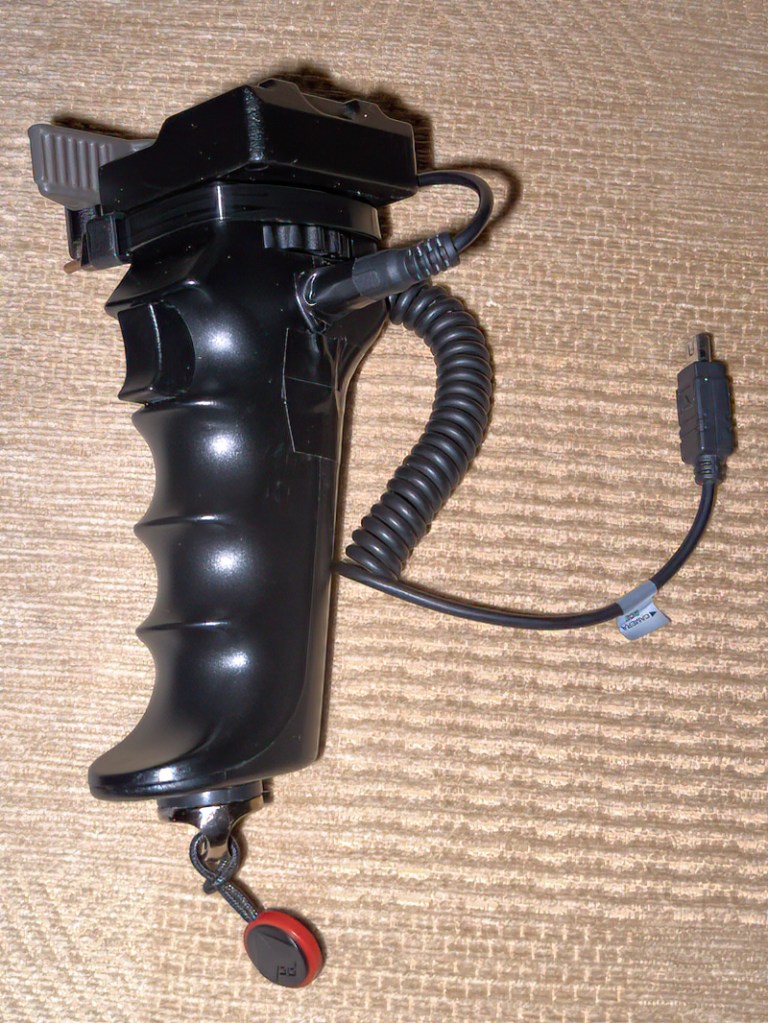
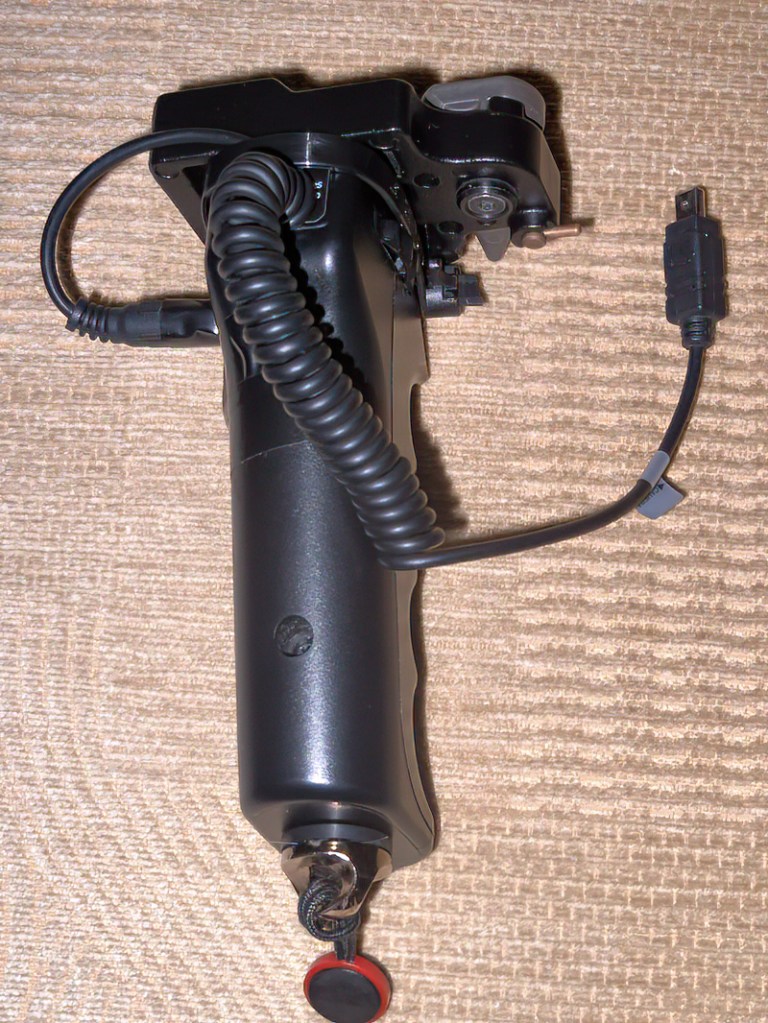
For my last outing I took my modified pistol grip with me. I think that it does help as I can further brace myself by pulling my elbow into my side and using the trigger shutter release on the grip. I modified the grip, a JJC grip that I’ve had a while, fitted one of my favorite Manfrotto type quick release system thingies, used a cable tie to give the cable some strain relief, taped around the 3.5mm plug end of the cable to seal it and fitted a tripod strap eyelet and Peak Design quick release clip to bottom so that I can attach a wrist strap if desired. I’ve rotated the Manfrotto quick release at 90 degrees to normal so that the plate part on the camera doesn’t obstruct the camera’s battery compartment lid. You might also notice that I’ve superglued the lock shutter button on the side of the grip below the plug in the off position and taped over it as this gets knocked too easily. Works well!. πŸ™‚

All the best,

Leigh

Can’t carry heavier or bulky gear now but I have a solution. :)

Hi everyone,

Long time, no post. πŸ™‚ I hope this finds you all well. I’ve not been able to get out very often but I have more or less finalised my gear choice as largely dictated by my osteoarthritis pain in my legs and lower back. To this effect I’ve got my gear down to what I consider pretty much an absolute minimum.

Some while back I bought one of those Tech Pouches by Wandrd. It can accommodate my E-PL8 camera with EV-4 electronic viewfinder and M.Zuiko 12-45mm f/4 lens, a small, fast, prime lens such as my M.Zuiko 17 mm f/1.8 or 25 mm f/1.8 or as shown in the pictures below, my even smaller Lumix 20 mm f/1.7, two or three spare batteries and a small four card SD card case, some lens wipes, a small flash unit and a Manfrotto rain cover, from another of my bags, which fits the pouch perfectly, like a hand in a glove. The prime lens fits inside one of the elasticated pockets inside the pouch’s main compartment as does the flash and thus they’re secure and don’t rattle about. The (NEEWER) battery/card pouch fits neatly in the pouch’s front compartment and can easily be removed if required and placed in an inside jacket pocket to keep the batteries warm on a cold day.

I have to say that I’m impressed with the water-resistant properties of the Tech Pouch which got very wet in a recent outing and everything inside stayed dry but the addition of the rain cover gives me peace of mind to further protect against heavy precipitation. The rain cover has two slits, one on each side through which one threads a shoulder strap. I decided to remove the Wandrd strap and use the one belonging to the Manfrotto bag. Although the Wandrd strap does work, I didn’t much like the quick-release magnetic catch which can and has come apart on occasions and securing it with a couple of cable ties as I originally did prevents attachment of the rain cover. I fitted two carabiners as a temporary measure whilst I wait for some attachable 30mm D-rings to arrive and this arrangement seems a lot more secure and the strap is wider and spreads the weight better.

Below some pictures.

I’m really hoping to get out more when I am able to, Autumn is probably my favorite time of year photographically with the fabulous colours in the foliage.

Kind regards

Leigh

Update: Now with D-rings attached.